






Choosing an entry door in a coastal or hot, humid climate is not just about curb appeal. Heat, moisture, and salt air can accelerate fading, swelling, corrosion, and finish failure, especially when the door material is not suited to the environment.
The best entry door for these conditions balances durability, insulation, maintenance needs, and resistance to weather exposure. Understanding how each material reacts to sun, humidity, and airborne salt can help homeowners make a smarter long-term investment.
Why Climate Matters When Choosing an Entry Door
Entry doors are exposed to some of the harshest conditions on the exterior of a home. In hot climates, intense sunlight can cause certain materials and finishes to fade, warp, or become brittle over time. Dark-colored doors may absorb even more heat, which can intensify expansion and contraction throughout the day.
Humidity creates a different set of challenges. Moisture in the air can penetrate vulnerable materials, leading to swelling, sticking, rot, mold, or delamination. Even doors that appear solid on the surface may begin to fail if moisture reaches the core or weakens the finish system.
Salt air adds another layer of wear, especially near the coast. Salt particles carried by ocean breezes can settle on the door, hardware, hinges, threshold, and surrounding frame. Over time, this can speed up corrosion and surface deterioration if the door and its components are not designed for marine exposure.
Fiberglass Entry Doors: A Strong Performer in Harsh Conditions
Fiberglass is one of the most reliable entry door materials for homes exposed to heat, humidity, and salt air. Unlike natural wood, fiberglass does not absorb moisture in the same way, which helps reduce the risk of swelling, warping, and rotting. This makes it especially practical for coastal homes, tropical regions, and areas with long humid seasons.
Another advantage of fiberglass is its stability under temperature changes. It can handle direct sun and daily heat cycles better than many traditional materials, provided the door has a high-quality finish and is installed correctly. Many fiberglass doors are also available with wood-grain textures, allowing homeowners to achieve the look of wood without taking on the same level of maintenance.
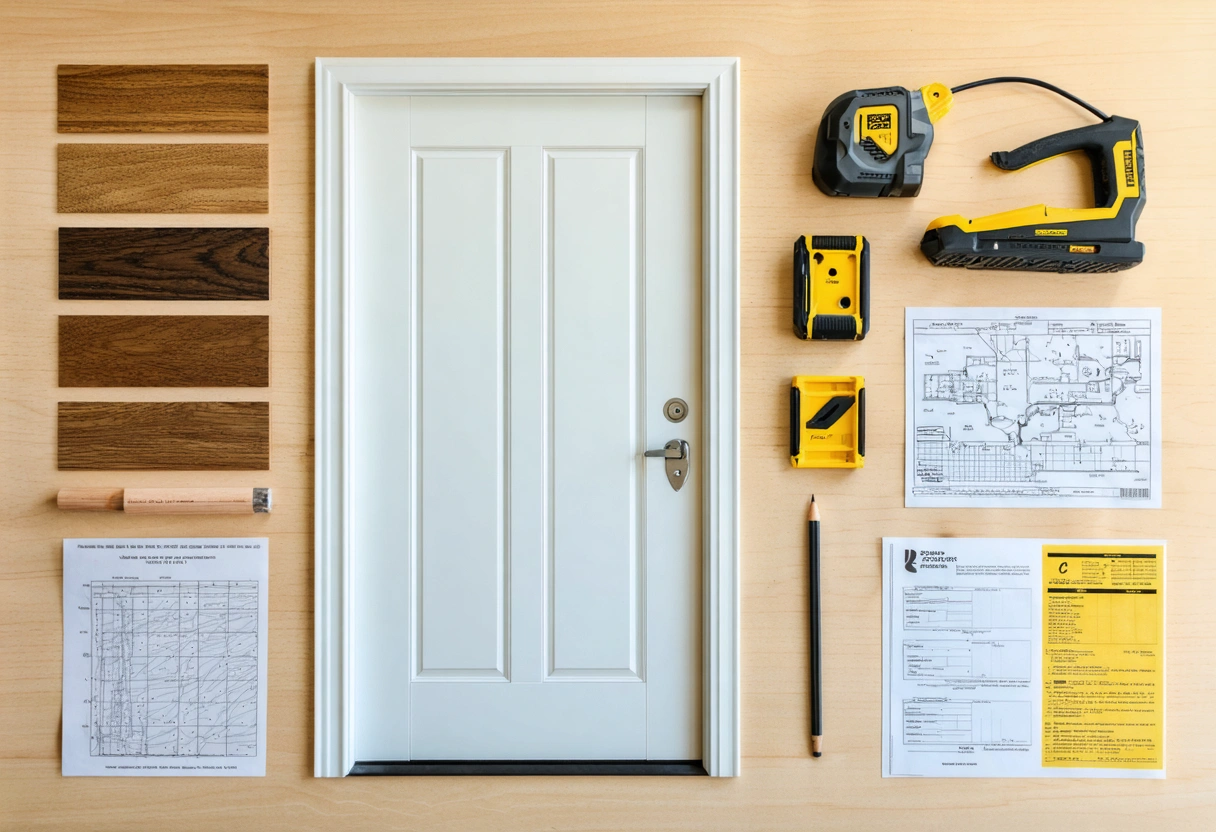
Maintenance and Finish Considerations
Although fiberglass is low maintenance, it is not completely maintenance free. The finish still needs periodic cleaning to remove salt residue, pollen, dust, and other surface contaminants. In coastal areas, rinsing the door with fresh water and using a mild soap when needed can help extend the life of the finish.
Homeowners should also pay attention to the quality of the paint or stain system. A durable exterior-grade coating helps protect the door from ultraviolet exposure and surface wear. Lighter colors may perform better in areas with intense sun because they absorb less heat than darker finishes.
Steel Entry Doors in Heat, Humidity, and Salt Air
Steel entry doors are popular because they are strong, widely available, and often more affordable than premium fiberglass or solid wood options. They can perform well in many climates, especially when they have an insulated core and a factory-applied finish. However, salt air and humidity create specific concerns that homeowners should not overlook.
The main weakness of steel in coastal environments is corrosion. If the protective coating is scratched, chipped, or worn away, exposed metal can begin to rust. This is especially common around the bottom edge of the door, near hardware, along seams, and anywhere water or salt residue can collect.
When Steel Can Be a Good Choice
A steel door can still be a reasonable option in hot or humid areas if it is well protected from direct weather exposure. For example, a steel door installed beneath a deep porch, covered entry, or storm-rated overhang may last much longer than one exposed directly to wind-driven rain and salt spray.
For better durability, homeowners should look for galvanized steel doors with high-quality primer and exterior paint. The edges, cutouts, and hardware penetrations should be fully sealed because corrosion often starts in small unprotected areas rather than across the main face of the door.
Maintenance Concerns for Steel Doors
Steel doors need regular inspection in coastal climates. Small scratches should be touched up quickly before rust has a chance to spread. The door should also be cleaned periodically to remove salt deposits, especially on homes close to the ocean or exposed to strong coastal winds.
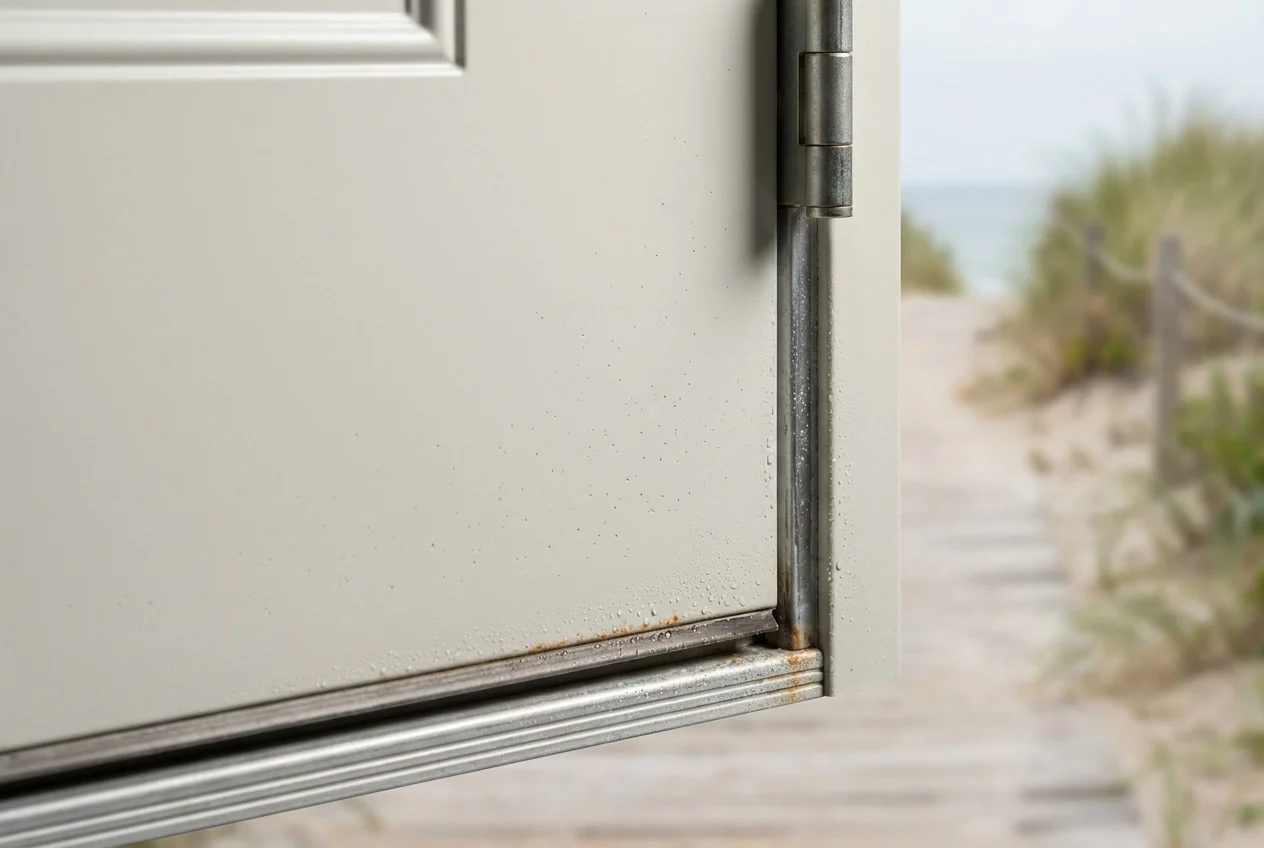
Hardware selection is also important. Standard hinges, locksets, and screws may corrode faster than the door itself. Stainless steel, brass, or specially coated hardware will usually perform better in salty air than basic plated components.
Wood Entry Doors: Beautiful but Maintenance Intensive
Wood entry doors offer warmth, character, and a traditional appearance that many homeowners prefer. A well-built wood door can be a stunning architectural feature, especially on custom homes or properties with historic design details. However, wood is one of the most climate-sensitive entry door materials.
In humid conditions, wood naturally absorbs and releases moisture. This movement can cause swelling, shrinking, sticking, checking, or warping if the door is not properly sealed and maintained. In hot climates, intense sun can dry out the finish, fade the color, and create surface cracks that allow moisture to enter.
Best Wood Options for Challenging Climates
Some wood species handle exterior exposure better than others. Mahogany, teak, cedar, and certain hardwoods are often chosen for their natural resistance to moisture and decay.
Engineered wood doors may offer better dimensional stability than traditional solid wood doors because they are designed to reduce movement. These doors often use layered construction with a veneer surface, which can help limit warping.
Protecting a Wood Door Near the Coast
A wood entry door in a coastal or humid climate should be protected by a substantial overhang whenever possible. Direct exposure to sun, rain, and salt air will shorten the life of the finish and increase the amount of maintenance required.
All six sides of the door should be sealed, including the top and bottom edges. These areas are often overlooked, but they are common entry points for moisture.

Wood doors also need regular refinishing. Depending on exposure, this may mean reapplying clear coat, stain, or paint every few years, and sometimes more often in harsh coastal conditions.
Aluminum and Aluminum-Clad Entry Doors
Aluminum is naturally resistant to red rust, which makes it appealing in coastal areas. It does not rot, and it is not vulnerable to insect damage.
Aluminum entry doors are more common in modern designs, commercial applications, and some coastal homes with contemporary architecture. They can be sleek and durable, but they are not always the best insulator unless they include thermal breaks or insulated construction.
Thermal Performance in Hot Climates
Aluminum conducts heat more readily than fiberglass, wood, or insulated steel. Without a thermal break, an aluminum door may transfer outdoor heat into the home more easily.
For residential use, homeowners should look for aluminum doors designed with energy performance in mind. Thermally broken frames, insulated panels, and high-performance weatherstripping can make a significant difference.
Finish Quality Matters
Powder-coated or anodized aluminum finishes generally hold up better than low-quality painted surfaces. In salt air, regular rinsing is still important because salt can sit on the surface and gradually damage the finish.
Composite Entry Doors and Hybrid Construction
Composite entry doors are designed to combine the strengths of multiple materials. Depending on the manufacturer, a composite door may include fiberglass skins, engineered cores, PVC components, reinforced stiles, or other moisture-resistant materials.
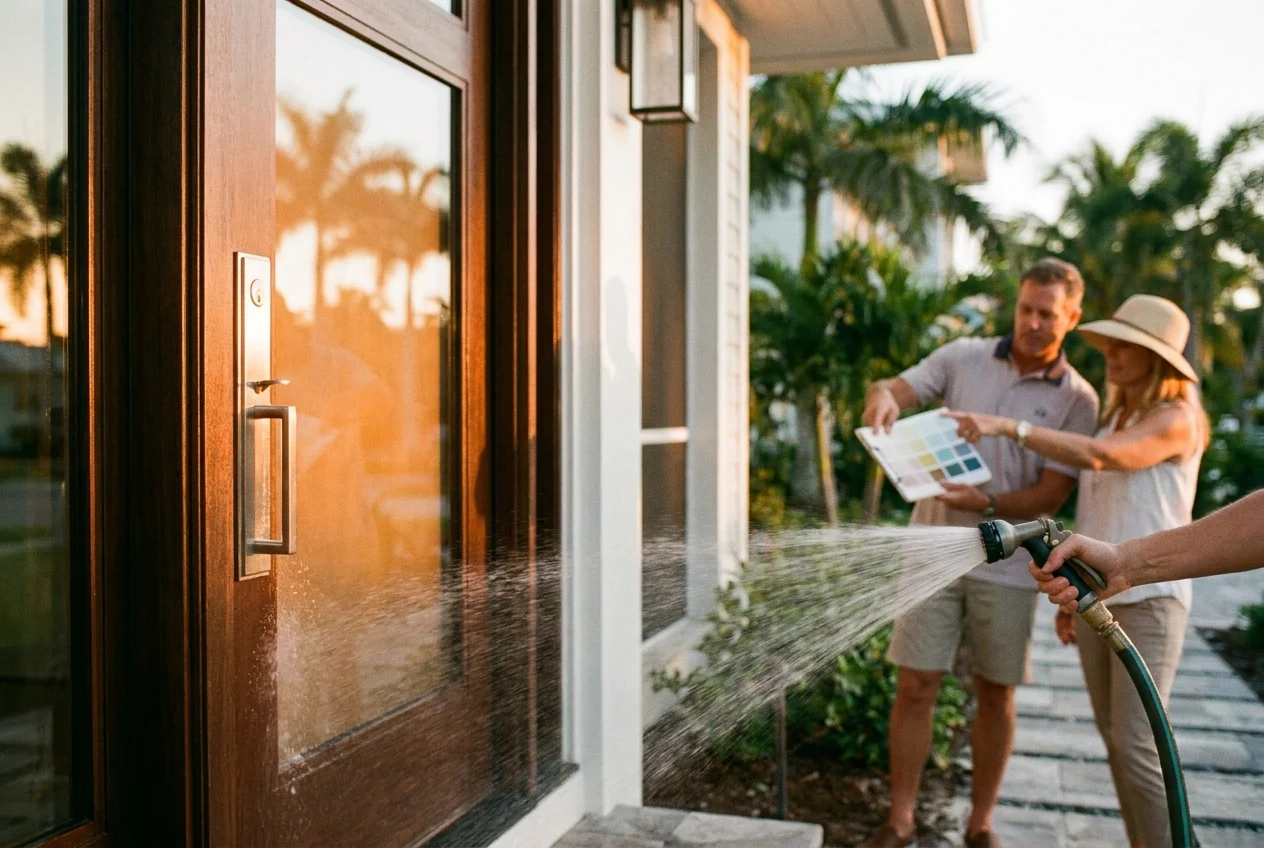
The key advantage of composite construction is stability. A well-designed composite door can resist swelling, rotting, and warping better than traditional wood. Many composite systems are also built to accept durable exterior finishes that stand up well to sunlight and moisture.
Comparing Composite to Fiberglass
Fiberglass and composite doors are sometimes discussed together because many fiberglass doors include composite rails, stiles, or frames. In practical terms, both can be excellent choices for harsh environments when they are made by a reputable manufacturer and installed correctly.
The difference often comes down to the exact construction of the door. Homeowners should review what the core, edges, frame, and exterior skin are made from.
Do Not Overlook the Door Frame
The door slab is only one part of the entry system. In coastal, hot, or humid climates, the frame can fail before the door does if it is made from untreated or poorly protected wood.
Composite frames, fiberglass frames, PVC jambs, and treated wood frames can improve durability in moisture-prone areas. These materials are less likely to absorb water and decay than standard finger-jointed pine or untreated wood.
Thresholds and Sills
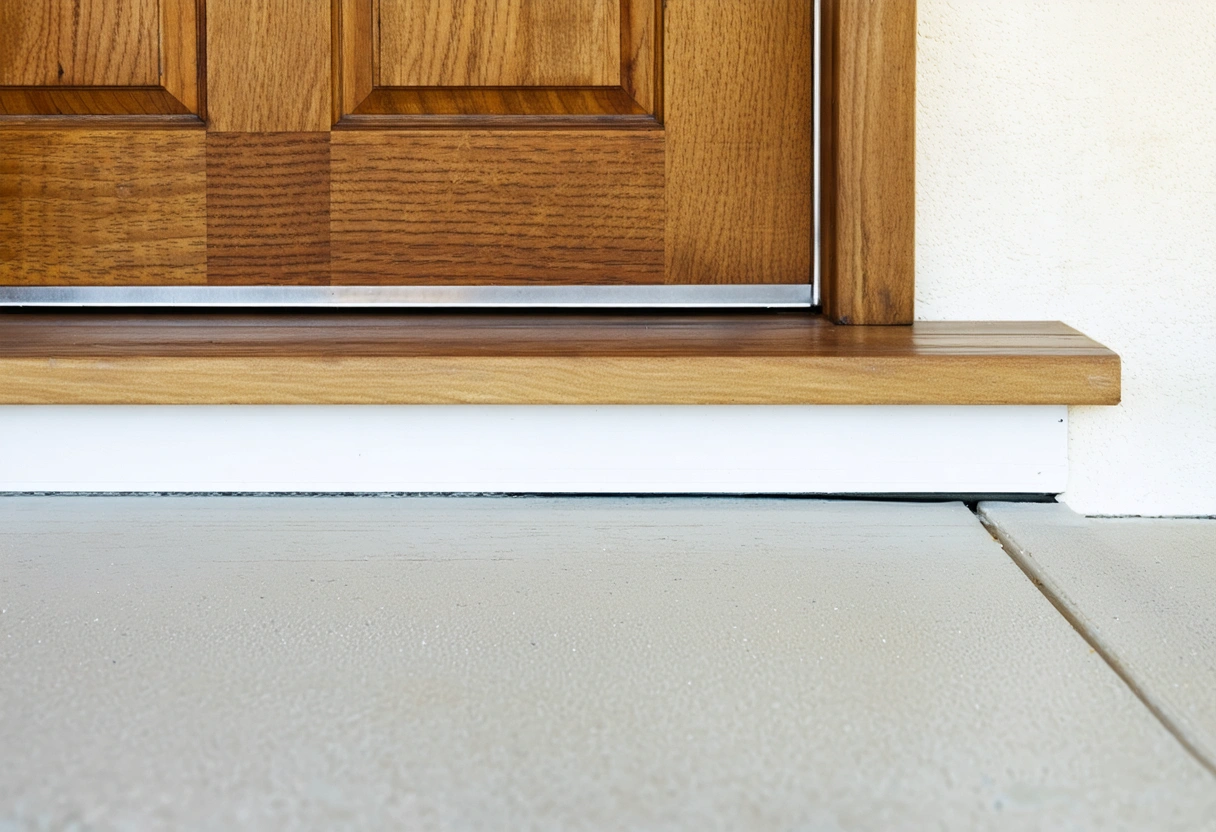
The threshold is another critical point of protection. It sits at the bottom of the entry and is exposed to foot traffic, wind-driven rain, dirt, and salt residue.
In coastal areas, corrosion-resistant sill materials areIn coastal areas, corrosion-resistant sill materials are important because the bottom of the entry system often sees the most moisture exposure.
Weatherstripping and Seals
Weatherstripping should remain flexible, tight, and continuous around the door. Heat can dry out low-quality seals, while humidity and salt can accelerate wear. If the weatherstripping cracks, flattens, or pulls away from the frame, moisture and hot air can enter more easily.
Magnetic weatherstripping, compression seals, and high-quality door sweeps can improve performance, especially in areas with heavy rain or strong coastal winds. These components should be checked regularly because even a durable door material will not perform well if the entry system is not sealed properly.
Hardware Choices for Salt Air Exposure
Hardware is often the first part of an entry door system to show damage in a coastal environment. Hinges, handles, deadbolts, screws, strike plates, and decorative accents can corrode when salt deposits remain on the surface.
Stainless steel is one of the better choices for salt air, especially marine-grade stainless steel where available. Solid brass and bronze can also perform well, although they may develop a natural patina over time.
Protective Finishes and Routine Cleaning
Hardware with a high-quality protective coating can extend the life of the entry system, but it still needs maintenance. Rinsing or wiping hardware with fresh water helps remove salt before it causes damage.
Homeowners should also inspect screws and fasteners. Even if the visible handle set looks good, rusting screws can weaken the connection points and create stains.
Need help with Entry Door Materials That Hold Up Best in Heat, Humidity, and Salt Air?