





Storm season has a way of exposing weak points around the home, and the entry door is one of the most important barriers between severe weather and your living space. A front, back, or side entry door that looks acceptable on a calm day may fail to perform when heavy rain, strong wind, flying debris, and pressure changes arrive.
Knowing what to look for before the next round of storms can help homeowners avoid water intrusion, energy loss, security concerns, and costly damage. A professional door installation assessment often begins with visible wear, but the most important warning signs can also be found in how the door opens, seals, and stands up to changing weather.
Why Your Entry Door Matters During Severe Weather
An entry door does more than provide access to the home. It helps protect the structure from wind-driven rain, outdoor humidity, drafts, insects, and impact from loose debris. When the door, frame, threshold, or weatherstripping begins to fail, the entire opening can become vulnerable during a storm.
Storm conditions place extra stress on door systems because wind can push against the slab while rain collects around the sill and frame. If the door is already warped, loose, cracked, or poorly sealed, water may find its way inside. Even small gaps can allow moisture to reach flooring, drywall, trim, and insulation.
A strong entry door also supports home security during unpredictable weather. Storms can loosen hardware, weaken compromised frames, and make existing alignment issues worse. For homeowners planning ahead, evaluating the door before severe weather arrives is a practical part of seasonal home maintenance.
Visible Damage That Should Not Be Ignored
Cracks, dents, rust, rot, and peeling finishes are among the clearest signs that an entry door may be nearing the end of its service life. While some cosmetic wear is normal over time, damage that affects the door surface or frame can reduce performance when the weather becomes harsh.
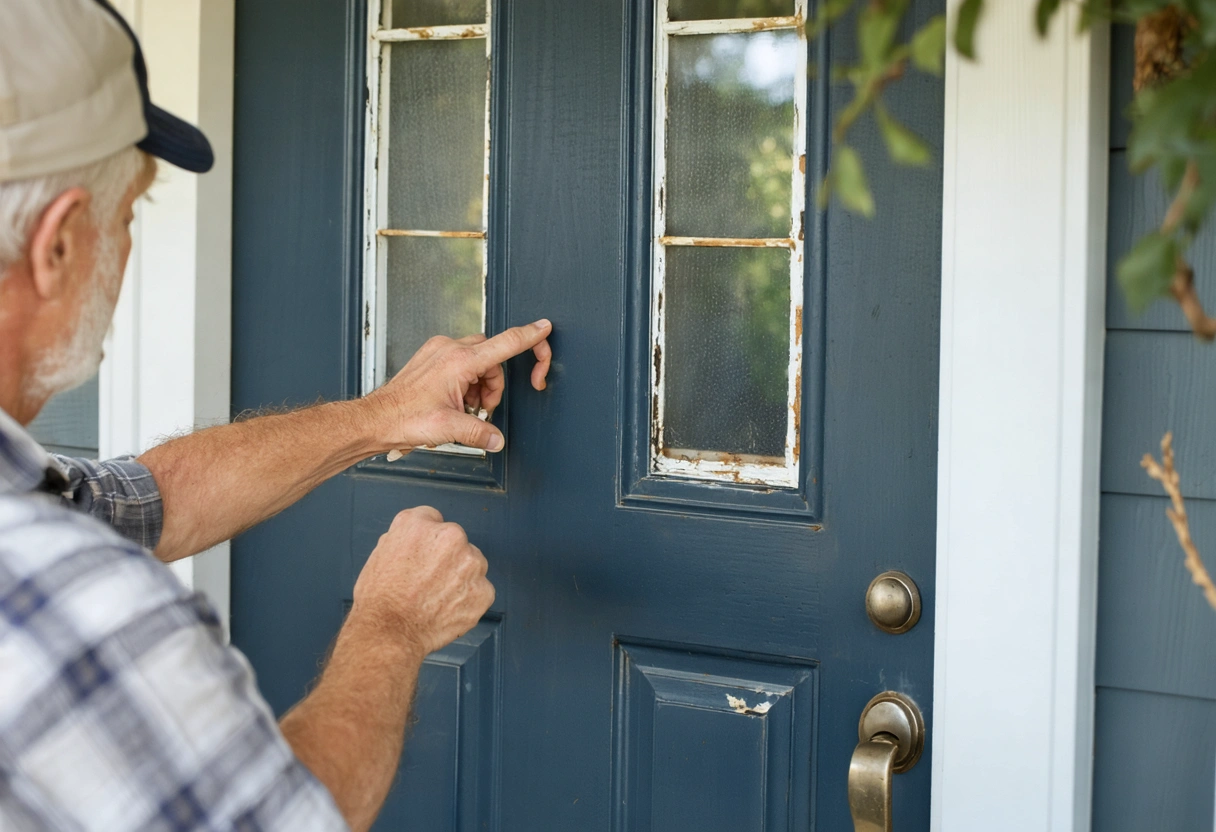
Wood doors may show soft spots, swelling, splitting, or darkened areas where moisture has entered the material. Steel doors can develop rust, especially near the bottom edge or around hardware. Fiberglass doors are generally durable, but they can still crack, fade, or separate from internal components after years of exposure.
Damage Around the Frame and Threshold
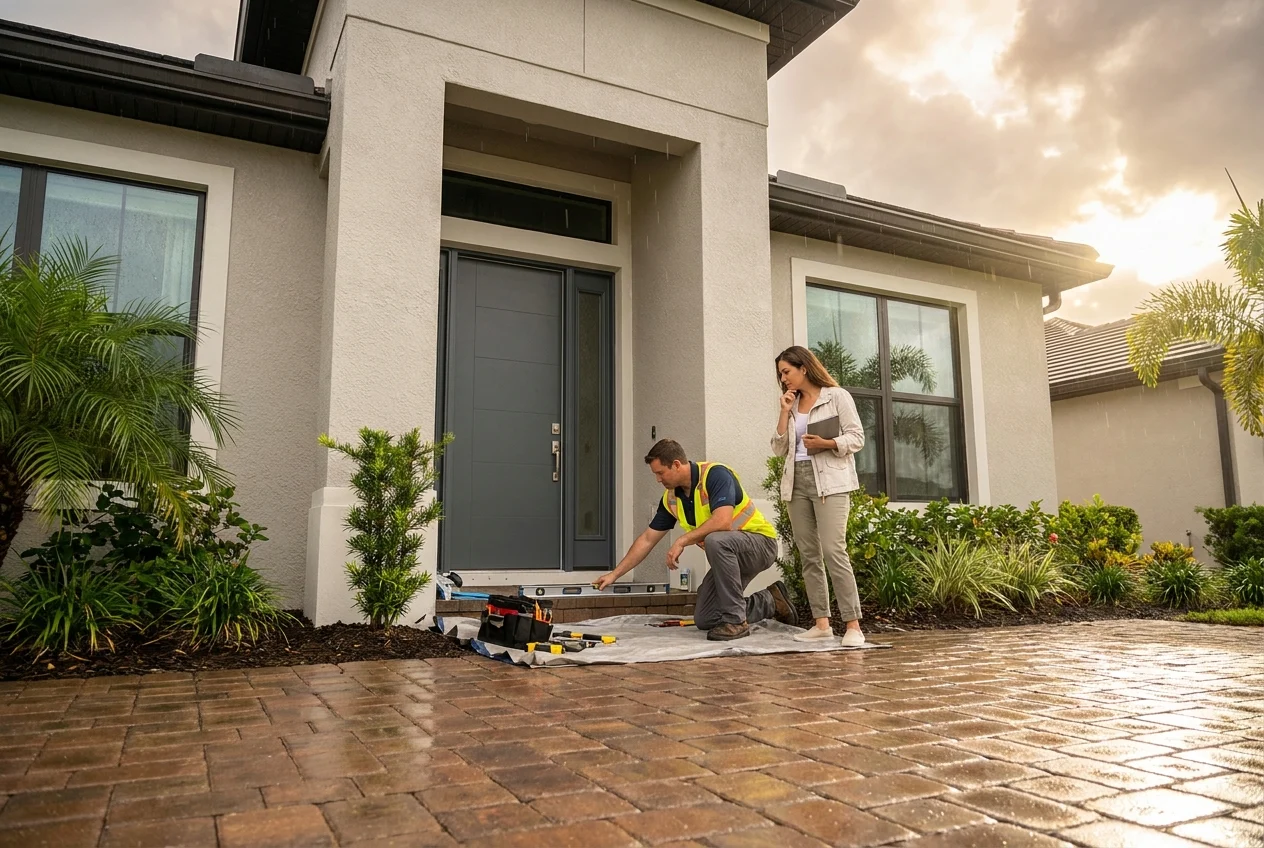
The door slab is only one part of the system. The frame, threshold, and sill area are just as important for storm protection. If the frame is rotting, pulling away from the wall, or showing gaps at the corners, the door may not be able to seal properly even if the slab itself appears to be in decent condition.
Pay close attention to the bottom of the doorway, where water exposure is often most noticeable. A loose threshold, crumbling caulk, stained flooring, or damp trim can suggest that moisture has already been entering the opening. These issues are especially important to address before storm season because wind-driven rain can make minor leaks much worse.
Difficulty Opening, Closing, or Latching the Door
An entry door should open and close smoothly without sticking, scraping, lifting, or slamming. If you have to push hard, pull the handle upward, or lean into the door to get it to latch, the door system may be out of alignment. During storm season, alignment problems can become more than an inconvenience because they may prevent the door from sealing tightly against wind and rain.
Sticking often happens when a door has absorbed moisture, the frame has shifted, or the hinges have loosened over time. In some cases, seasonal humidity causes temporary swelling. However, if the problem returns frequently or continues after the weather changes, it may indicate that the door or frame is no longer stable enough to perform reliably.

Latch and Lock Problems Can Signal Structural Movement
A deadbolt or latch that no longer lines up with the strike plate is a warning sign. The problem may seem minor at first, especially if the lock still works with extra effort. However, a misaligned lock can reduce security and allow small gaps to form around the door slab.
Before storm season, homeowners should test the door by closing it gently and checking whether the latch catches without pressure. The deadbolt should slide fully into place without forcing the key or thumb turn. If the lock only works when the door is pushed, pulled, or lifted, the opening may need professional adjustment or full replacement.
Drafts, Air Leaks, and Uneven Indoor Temperatures
If you feel air moving around the entry door, the seal is no longer doing its job. Drafts are especially noticeable on windy days, but they can also be detected by standing near the door and feeling for temperature differences along the sides, top, and bottom. A door that allows air in during normal weather is more likely to allow wind-driven rain in during a storm.
Air leaks can come from worn weatherstripping, a damaged sweep, gaps between the slab and frame, or a threshold that no longer fits tightly. In some cases, replacing the weatherstripping can help. However, if the door is warped, sagging, or installed in a compromised frame, new seals may not solve the problem for long.
Light Around the Door Is a Simple Warning Sign
One easy way to check for sealing problems is to look for daylight around the closed door. If light is visible along the edges, near the corners, or under the threshold, air and moisture may also be able to pass through. This is especially concerning in areas that receive heavy rain or strong wind gusts.
A small gap may not seem urgent during mild weather, but storms can force water through openings that are barely visible. Over time, these leaks may stain flooring, damage trim, create musty odors, and contribute to hidden moisture problems inside the wall cavity.

Water Stains, Moisture, or Mold Near the Entryway
Water stains around the door are a strong indication that the entry system is not protecting the home properly. Staining may appear on the interior trim, flooring, drywall, or baseboards near the door. You may also notice bubbling paint, peeling caulk, warped flooring, or a damp smell after rain.
Moisture near an entry door should never be dismissed as a minor issue. Even if the water only appears during severe storms, it means the opening has a weakness. Repeated exposure can lead to wood rot, mold growth, damaged subflooring, and deterioration of the surrounding wall materials.
Watch for Hidden Moisture After Rain
Some leaks are easy to see, while others remain hidden until damage becomes more advanced. After a heavy rain, inspect the area around the threshold and lower corners of the frame. Check rugs, mats, and flooring near the door for dampness. Look for discoloration or soft trim that may suggest water has been entering for some time.
If moisture is found repeatedly, the issue may involve more than surface caulking. The sill pan, flashing, frame, or door alignment may be failing. In that situation, a replacement door installation may be the most effective way to correct the problem and help protect the home before the next storm season.
Warping, Swelling, or Separation in the Door Slab
A warped door cannot create a consistent seal against the frame. Warping may cause one corner of the door to pull away, the bottom edge to rub, or the top to sit unevenly. This can happen with older wood doors, but any door material can experience performance issues if the structure has been weakened by age, moisture, or impact.
Swelling is another important sign, especially if the door becomes harder to use during humid or rainy conditions. A door that changes shape with the weather may not provide dependable protection during a storm. Once moisture has entered the door material, the problem often continues to worsen.
Panel Separation and Loose Glass Inserts
Doors with decorative panels, sidelites, or glass inserts should be checked carefully before storm season. If panels are separating, trim is loose, or glass inserts rattle when the door moves, wind and rain may be able to enter through weakened areas.
Any movement within the slab should be taken seriously. A door that is separating internally may not be restored with simple hardware adjustments. Replacement may be recommended when the slab no longer functions as one solid, weather-resistant unit.
Worn Weatherstripping and Damaged Door Sweeps
Weatherstripping and door sweeps are small components, but they play a major role in storm protection. They help block air, rain, dust, insects, and outdoor humidity from entering the home.
The door sweep at the bottom is especially important because stormwater often collects near the threshold. A damaged sweep can allow water to blow underneath the door, particularly when rain is pushed horizontally by strong wind.
When New Weatherstripping Is Not Enough
Replacing weatherstripping may solve the issue if the door and frame are still in good condition. However, if the door is warped or the frame is out of square, even high-quality weatherstripping may leave gaps.
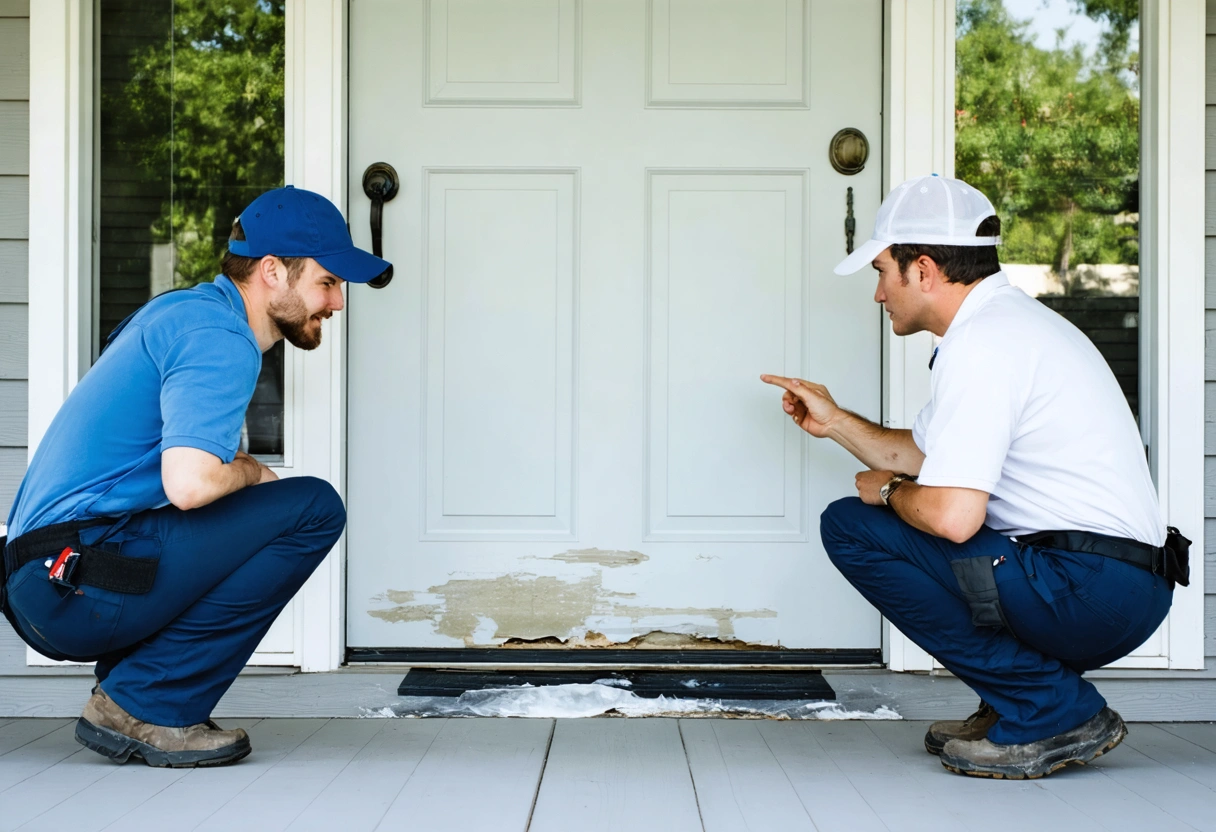
If weatherstripping has to be replaced frequently, or if it wears unevenly, the door may be rubbing because of alignment problems. That repeated wear can point to a larger issue with the hinges, frame, threshold, or door slab.
Loose Hinges, Hardware, and Security Concerns
Strong winds can place pressure on an entry door, and loose hardware makes the entire system more vulnerable. Hinges should be firmly attached to both the door and frame.
If screws spin without tightening, the wood around the hardware may be stripped or deteriorated. If the frame is soft, cracked, or damaged near the strike plate, the door may not provide reliable security.
Hinge Sag and Door Movement
A sagging door often shows visible symptoms such as uneven gaps, scraping at the threshold, or a latch that misses the strike plate. While hinge adjustments may help in some cases, ongoing sagging may mean the door slab is too heavy for the existing frame, the hinge screws no longer hold properly, or the frame itself has weakened.
In many cases, hardware problems are symptoms of a larger door system failure. If tightening, adjusting, or replacing hardware does not restore proper operation, a professional evaluation can determine whether replacement is the more reliable long-term solution.
Need help with Signs Your Entry Door Needs Replacement Before the Next Storm Season?