



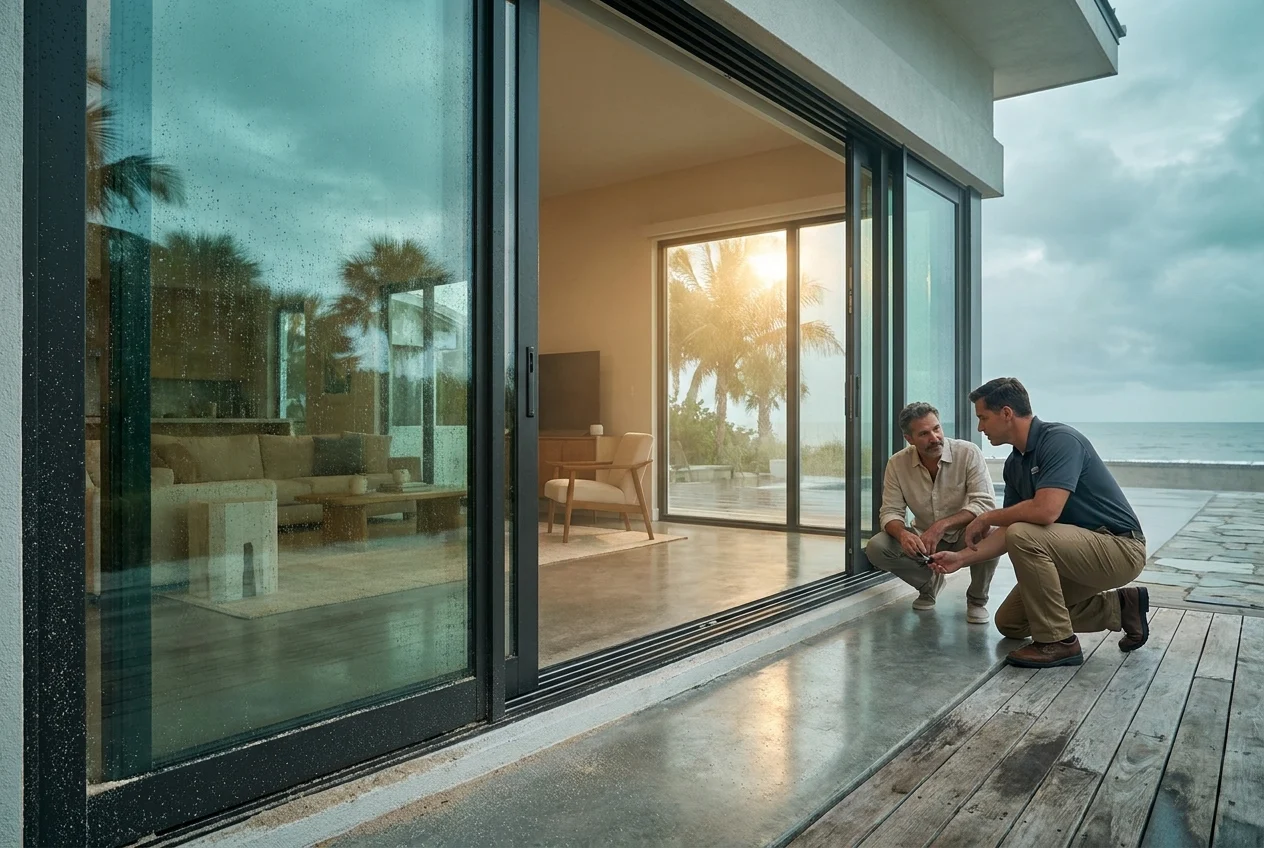
Sliding glass doors make Florida homes feel brighter and more connected to patios, pools, and outdoor living spaces. However, frequent use, coastal air, humidity, wind driven rain, and airborne debris can gradually affect the locks, tracks, and rollers that keep these large doors secure and easy to operate.
Small changes such as a stiff handle, scraping sound, uneven movement, or loose latch may indicate more than ordinary wear. Recognizing these warning signs early can help homeowners prevent security concerns, water intrusion, damaged frames, and more expensive repairs.
Why Sliding Door Problems Develop Quickly in Florida
Florida’s climate places unusual stress on sliding glass door components. Moisture and salt in the air can corrode metal locks, fasteners, roller assemblies, and track surfaces. Homes near the coast may experience this deterioration faster, but inland properties are also exposed to high humidity, heavy rain, sand, dust, and organic debris.
Temperature changes can also affect how a sliding panel sits inside its frame. Although these changes may be subtle, they can contribute to alignment problems when combined with worn rollers, loose hardware, or a settling structure. A door that once closed smoothly may begin rubbing, dragging, or failing to meet the locking jamb correctly.
Heavy Panels Increase Wear
Sliding glass panels are much heavier than they appear. Their weight rests largely on small roller assemblies located along the bottom edge. When the rollers become dirty, corroded, cracked, or improperly adjusted, the door may place excessive pressure on the track and become difficult to move.
Forcing a heavy door open or closed can accelerate damage. It may flatten sections of the track, loosen the handle, strain the lock, or cause the panel to shift out of alignment. Difficulty moving the door should be treated as a maintenance warning rather than accepted as a normal feature of an older door.
Lock Problems That Can Affect Home Security
A sliding glass door lock must align precisely with its strike or keeper to secure the panel. If the door sags because of worn rollers or a damaged track, the latch may no longer engage fully. In some cases, the handle may appear to lock even though the internal hook or latch has only partially entered the keeper.

Corrosion, loose mounting screws, worn internal parts, and repeated force can also weaken the locking mechanism. Homeowners should pay attention when a lock feels unusually loose, requires lifting the door to engage, or releases with minimal handle movement. These symptoms can indicate that the lock, door alignment, or both need professional evaluation.
Signs a Lock Is Not Engaging Correctly
Common warning signs include a latch that misses the keeper, a thumb turn that feels stiff, and a handle that moves without operating the lock. Visible gaps between the sliding panel and jamb can also suggest that the door is not closing far enough for reliable locking.
Repeatedly slamming the panel to make the latch catch is not a dependable solution. The impact can damage the glass door hardware and worsen alignment issues. The underlying cause may involve roller height, a shifted keeper, loose fasteners, frame movement, or internal lock failure.
Track Damage Can Make the Entire Door System Struggle
The bottom track guides the rollers and supports smooth panel movement. Dirt, pet hair, sand, leaves, and small stones often collect in this narrow channel. As the rollers pass over the debris, the door may vibrate, scrape, or require more force to move.
Routine contamination is not the only concern. Corrosion can create rough spots, while repeated operation with damaged rollers can wear grooves into the track. A bent or flattened section may prevent the panel from traveling evenly and can cause it to tilt as it approaches the jamb.
Warning Signs of a Worn or Damaged Track
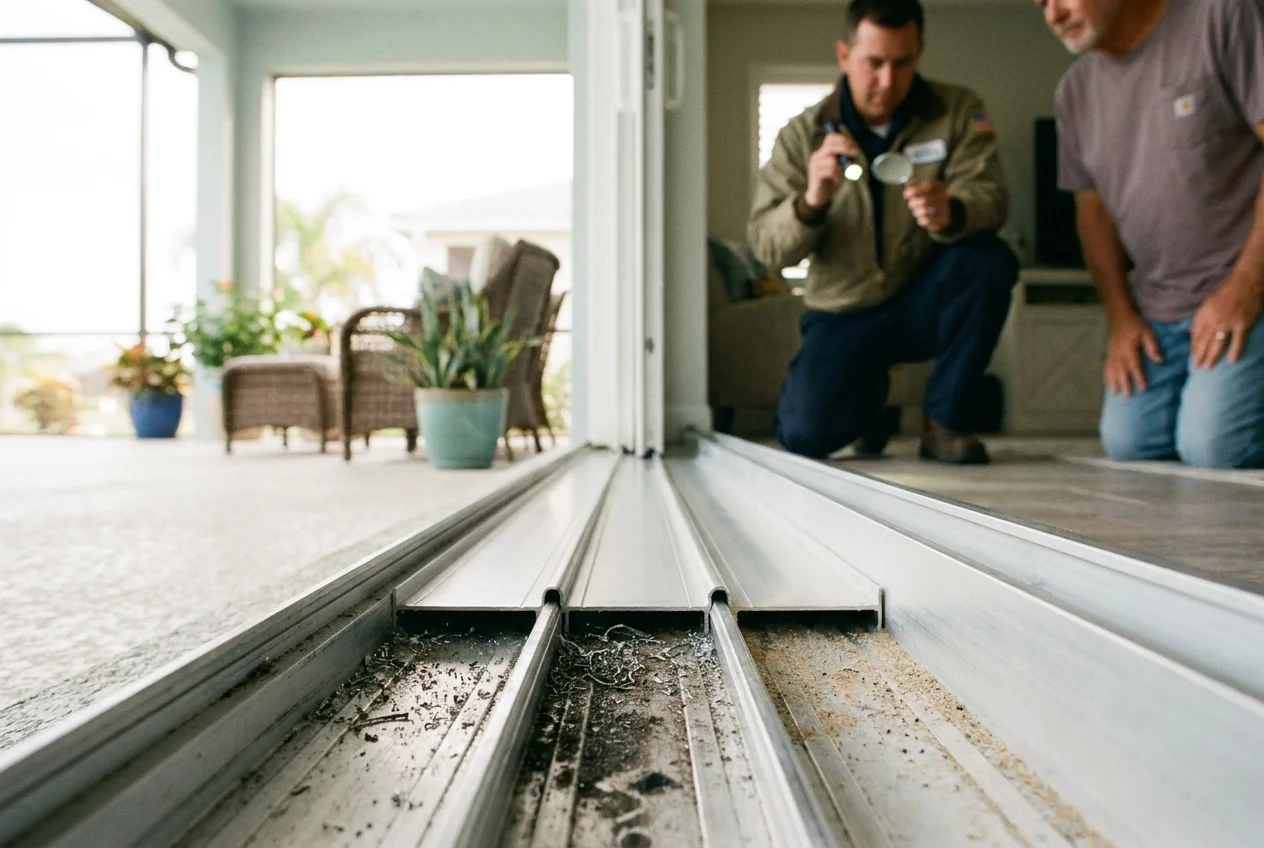
A door that bumps at the same point during every opening may have a damaged track section or concentrated debris. Metal shavings, dark residue, or visible scoring can indicate that a roller is grinding against the track instead of rotating properly.
Homeowners may also notice that the panel rocks from side to side, jumps slightly, or leaves a trail of fine metal particles. These symptoms should not be ignored.
Cleaning a Track Versus Repairing It
Loose surface debris can often be removed carefully with a vacuum and a soft brush. The channel can then be wiped with a damp cloth and dried thoroughly.
Cleaning will not correct deep grooves, dents, sharp edges, or sections that have separated from the frame. Track caps or repair covers may be appropriate in certain systems, but they must fit correctly and provide a level rolling surface.
Worn Rollers Are a Common Cause of Heavy Door Movement
Rollers are designed to rotate smoothly while carrying the weight of the glass panel. Over time, their bearings can seize, wheels can crack, and adjustment screws can corrode.
Roller problems are sometimes mistaken for a dirty track because both conditions make the door feel heavy. Cleaning may produce little improvement when the roller assembly itself has failed.
Uneven Roller Wear Affects Door Alignment
Most sliding panels rely on more than one roller assembly. If one side wears faster than the other, the panel may sit at an angle.
This tilt can create several related problems. The latch may miss its keeper, weatherstripping may not seal evenly, and one corner may rub against the frame.
Why Roller Replacement Is Usually Not a Simple Household Task
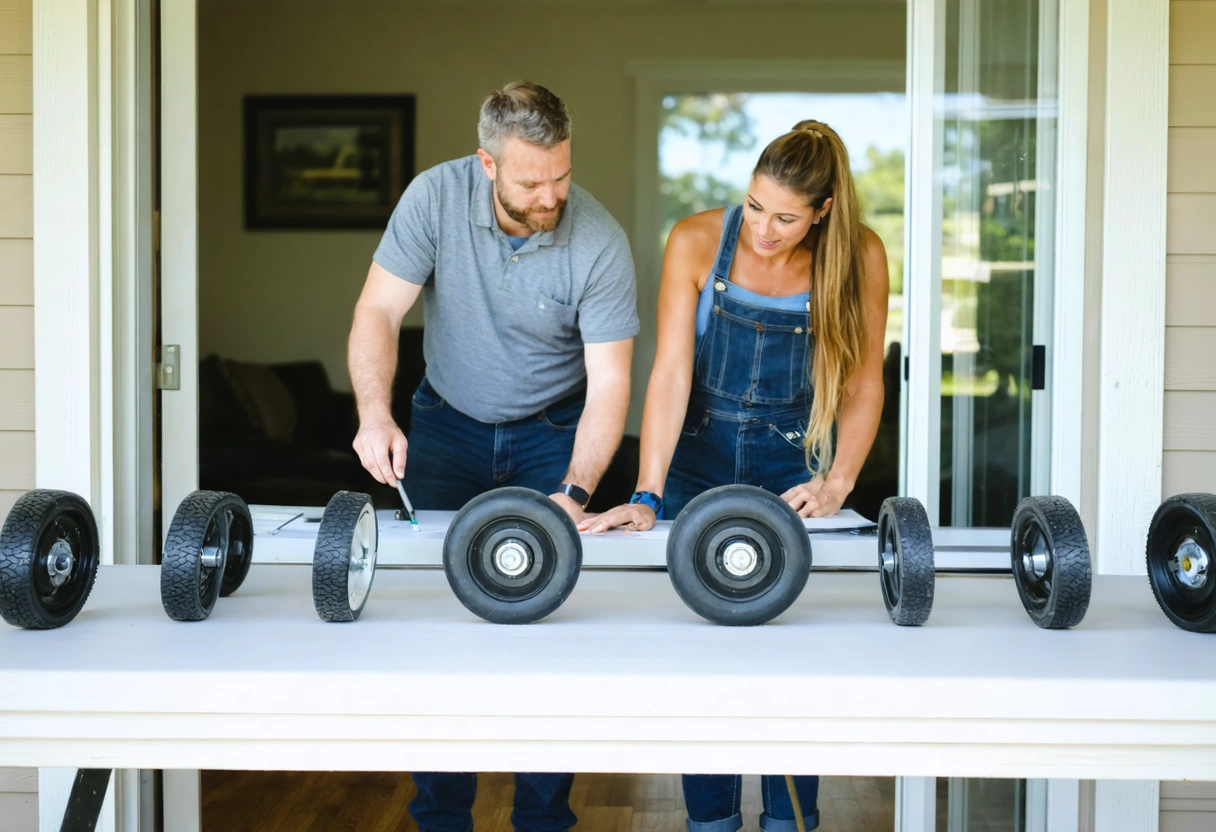
Accessing the rollers often requires removal of the glass panel. Sliding panels can be extremely heavy, awkward to control, and vulnerable to impact at their edges.
Replacement rollers must also match the door system. Wheel diameter, housing dimensions, mounting style, material, and adjustment range can vary. Installing an incompatible assembly may leave the panel unstable or place the glass and frame under uneven stress.
Water Intrusion May Begin With Alignment and Drainage Problems
Sliding door frames are designed to manage limited amounts of water through channels and drainage openings. When tracks fill with debris, these drainage paths can become restricted.
A poorly aligned panel can also reduce contact with weatherstripping. Even a narrow gap may allow rain or humid air to enter during severe weather.
Interior Clues That Require Attention
Discolored flooring, swollen baseboards, soft drywall, musty odors, and recurring moisture at the corners of the frame can signal an ongoing leak. Homeowners should also look for bubbling paint or corrosion on fasteners near the sill.
Drying the visible water does not address the source. Repeated intrusion can damage flooring systems and concealed building materials. An inspection is especially important when leaks appear during wind driven rain but not during ordinary rainfall.
Weatherstripping and Interlocks Support Security and Efficiency
Sliding doors commonly use weatherstripping along the jambs, meeting stiles, and frame channels. These materials help limit air leakage, insects, dust, and water. They can become compressed, torn, brittle, or detached after years of movement and exposure.
Many door systems also use interlocking vertical components where panels meet. When the sliding panel is properly closed, these parts engage to improve the seal and resist movement.
Visible daylight, drafts, rattling during wind, or insects entering around the panel can indicate a sealing problem. Replacing weatherstripping may help, but the door should first be checked for sagging, frame distortion, and roller problems so that new material is not quickly damaged.
Loose Handles and Fasteners Should Be Corrected Promptly
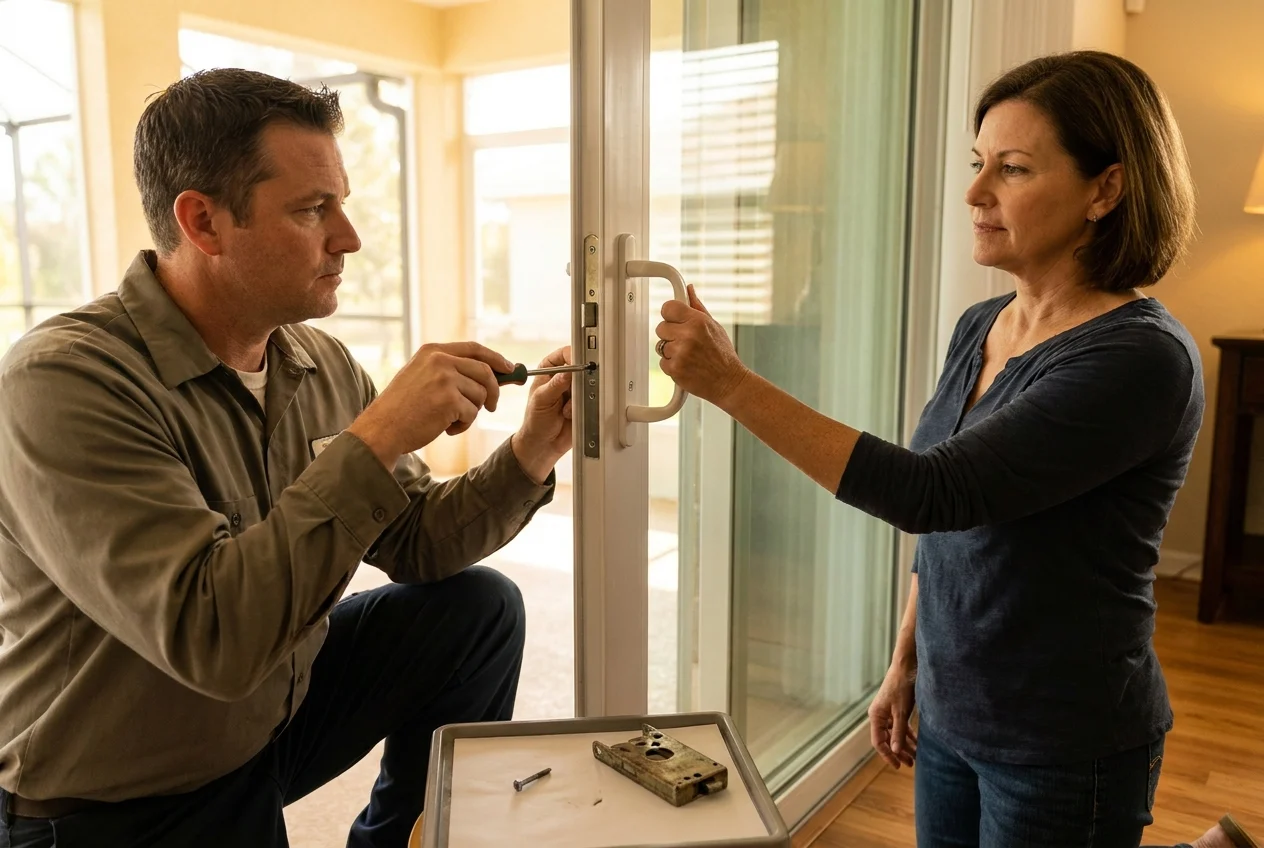
A loose handle can make a door harder to control and may interfere with lock operation. Movement at the handle can enlarge mounting holes, strain internal lock parts, or cause screws to back out further.
Missing, corroded, or mismatched screws can be evidence of an earlier repair. Substituting an oversized screw without understanding the door construction may damage internal components or interfere with the glass clearance.
Security Bars Are Helpful but Do Not Replace a Working Lock
A properly fitted security bar or track device can provide an additional layer of protection by limiting panel movement. However, it should not be treated as a substitute for a functioning lock, correctly aligned keeper, and sound frame.
A bar that is too short may allow enough movement for the latch to disengage. A device that fits poorly can also damage the track or create a trip hazard when removed.
Homeowners should also check whether the sliding panel can be lifted excessively within the frame. Some systems include anti lift devices or adjustment features intended to limit vertical movement.
Impact Rated and Hurricane Protection Systems Need Special Care
Impact rated sliding glass doors are heavy assemblies engineered as complete systems. Locks, rollers, frame anchors, interlocks, and panel alignment can all affect how the door performs.
Storm panels, shutters, and other protective systems should also remain accessible and functional. A dragging sliding panel or damaged lock should be addressed before storm preparations begin, when service demand is high and safe operation becomes more urgent.
Use Components Appropriate for the Door System
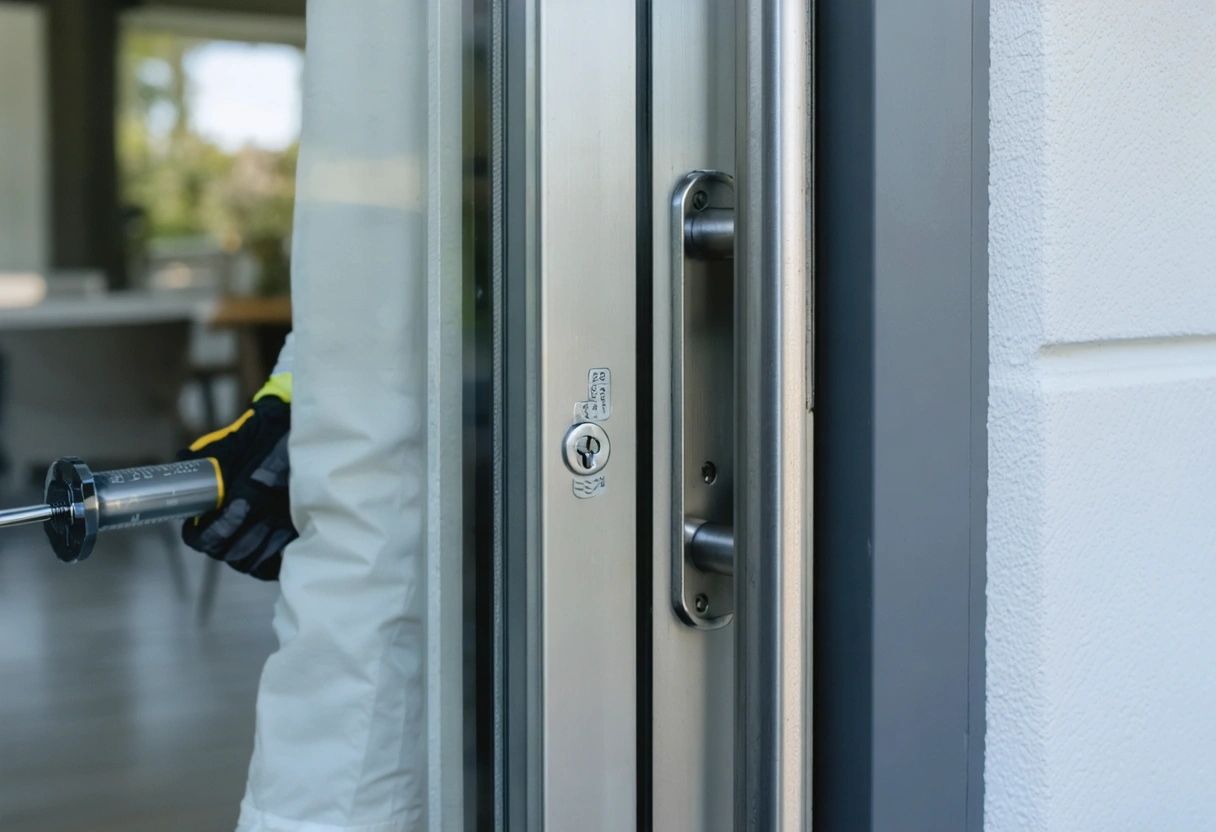
Repairs to impact rated or code compliant doors should use compatible components and follow manufacturer requirements. A qualified professional can identify the system, inspect its labeling, and determine whether damaged hardware affects operation, security, or rated performance.
When Professional Inspection Is Recommended
Professional service is advisable when a panel is extremely heavy, jumps off the track, has cracked glass, leaks repeatedly, or cannot lock securely. Grinding noises, visible frame damage, severe corrosion, and recurring misalignment also warrant inspection.
A technician can evaluate the rollers, track, lock, keeper, weatherstripping, drainage paths, and frame as a connected system. Correcting the underlying cause is more effective than replacing one visibly damaged part while leaving alignment or corrosion problems unresolved.
Preventive Maintenance for Florida Sliding Doors
Homeowners should vacuum track debris regularly, keep drainage openings clear, and inspect hardware for corrosion or looseness. Tracks should remain clean and dry, and any lubricant used should be compatible with the door manufacturer’s recommendations because oily products can attract sand and dirt.
Operate the door periodically and note changes in resistance, sound, alignment, and latch engagement. After major storms, inspect the sill for standing water and check exposed hardware for damage.
A sliding glass door should move with controlled, consistent effort and lock without lifting, slamming, or forcing the panel. When it does not, prompt evaluation can help preserve security, weather resistance, and dependable operation.
Need help with Sliding Glass Door Locks, Tracks, and Rollers: Common Problems Florida Homeowners Should Not Ignore?