






Florida homeowners know coastal storms can bring more than heavy rain and strong wind. When storm surge pushes water inland, even a few inches of intrusion can damage flooring, drywall, electrical systems, furniture, and structural components.
Flood barrier systems create a temporary or permanent line of defense against rising water. For homes in storm-prone areas, understanding how these systems work can help homeowners reduce flood exposure before the next major weather event.
Why Storm Surge Creates Serious Risks for Florida Homes
Storm surge occurs when strong winds and low atmospheric pressure push ocean, bay, or gulf water toward land. In Florida, the risk is high because many communities are near the coast, along tidal rivers, or in low-lying neighborhoods where water can move quickly during tropical storms and hurricanes.
Unlike ordinary rainfall flooding, storm surge can arrive with significant force. Water may enter through doorways, garage openings, sliding glass doors, vents, utility penetrations, and other vulnerable points around the home.
Common Entry Points During Surge Events
Many homes, especially older Florida properties, were not built with flood resistance as a primary design feature. Exterior doors, garage doors, crawl space vents, low windows, and patio openings can become direct pathways for water when surge levels rise above the surrounding grade.
Small gaps also matter. Water can seep through thresholds, foundation joints, plumbing penetrations, and wall openings, particularly when pressure builds against the exterior of the home.
How Flood Barrier Systems Create a Protective Perimeter
Flood barrier systems help reduce water intrusion by blocking or redirecting water before it reaches vulnerable openings. Depending on the property and flood risk, these systems may include removable panels, door barriers, garage flood barriers, perimeter barriers, or integrated flood gates designed for repeated use during storm season.
The goal is to create a sealed or partially sealed perimeter that limits the amount of water able to enter the home. No system can guarantee complete protection in every storm, but a properly selected and installed barrier can significantly reduce exposure to shallow or moderate flooding and help protect critical areas of the property.
Temporary and Permanent Barrier Options
Temporary flood barriers are installed before a storm and removed after the threat has passed. They may be useful for homeowners who want protection without permanently changing the appearance of the property.
Permanent systems are built into the property and are usually faster to deploy when severe weather is approaching. These solutions may include hinged flood gates, integrated tracks, fixed perimeter components, or removable panels that fit into permanently installed anchors.
Key Areas Where Flood Barriers Can Help Reduce Water Intrusion
Flood barrier systems are most effective when matched to the specific openings and low points of a home. Because storm surge does not always approach a property evenly, homeowners should look beyond the front door and consider every area where rising water could collect, press against the structure, or flow into interior spaces.
Exterior Doors and Entryways
Front doors, side doors, and rear patio doors are common locations for water intrusion. Even when a door appears to close tightly, the threshold and weatherstripping are usually designed to stop wind-driven rain, not standing floodwater.
For Florida homes with multiple exterior entrances, each door should be evaluated individually. A raised entry with several steps may need less protection than a low back door facing a canal, pool deck, or sloped yard.
Garage Doors
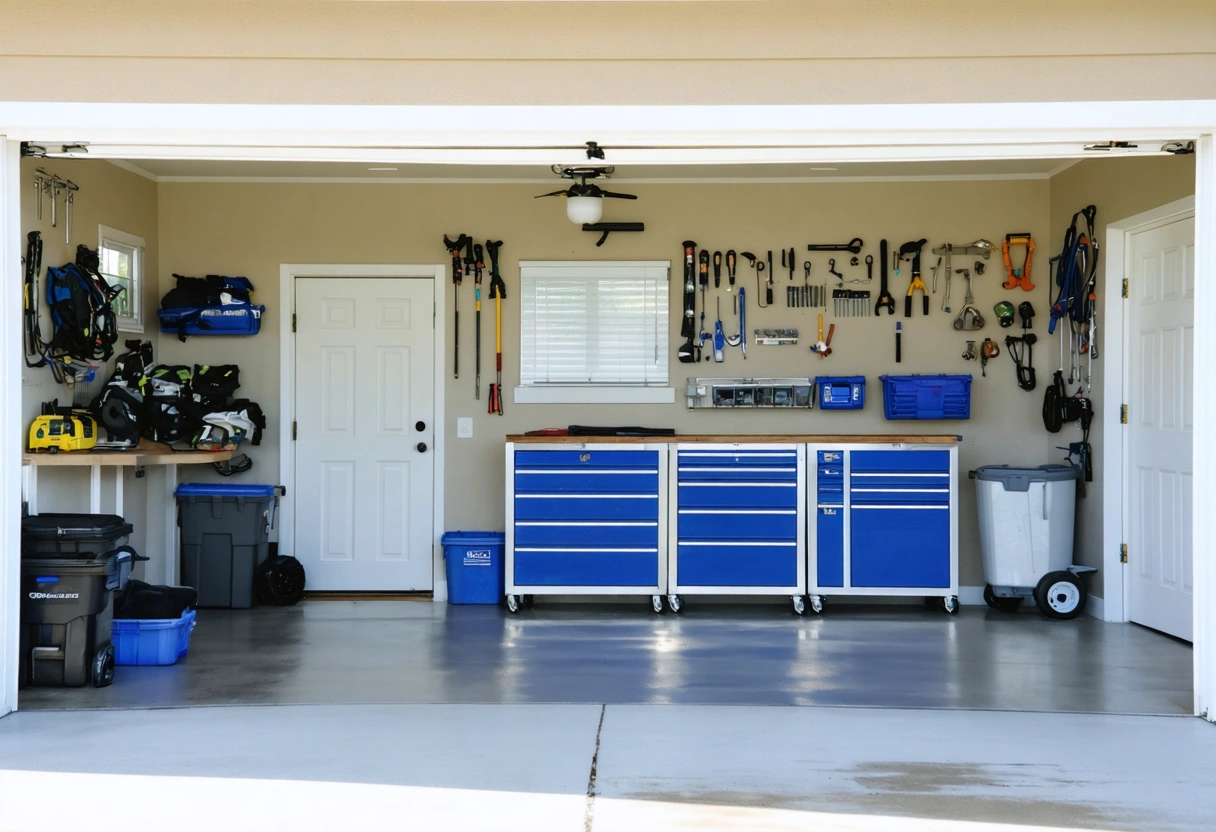
Garage doors are especially vulnerable during storm surge because they cover a wide opening and often sit close to driveway grade. Water can enter beneath the bottom seal, along side tracks, or through gaps created by wind pressure and door movement.
Garage flood barriers are designed to span larger openings and resist water pressure across the width of the door. Some systems use removable panels that lock into side channels, while others use inflatable or modular barriers placed outside the garage opening.
Sliding Glass Doors and Patio Openings
Many Florida homes include sliding glass doors that open to lanais, patios, pool decks, or waterfront views. These openings can be difficult to protect because they are wide, low, and often located on the side of the home most exposed to surge or wind-driven water.
Flood panels or removable barrier systems can be installed across these openings to help reduce intrusion. The surrounding wall, frame, and floor surface must be strong enough to support the barrier under pressure.
Vents, Crawl Spaces, and Utility Penetrations
Some homes have foundation vents, crawl space openings, air conditioning line penetrations, plumbing access points, or other small gaps that can allow water to move into hidden areas.
Specialized vent covers, sealing devices, and flood-resistant materials can help reduce water entry at these points. However, some vents are required for ventilation or building code purposes, so they should not be permanently sealed without understanding the effect on the structure.
Factors Florida Homeowners Should Consider Before Choosing a System
Choosing a flood barrier system is not simply a matter of buying the tallest or strongest product available. The right solution depends on the home’s location, elevation, construction type, expected flood depth, deployment time, and the homeowner’s ability to install or activate the system before a storm arrives.
Expected Flood Depth and Surge History
One of the first considerations is how high water has reached in the past and how high it could reasonably rise in future storms. Homeowners can review flood maps, local emergency management resources, neighborhood flood history, and prior storm reports to better understand exposure.
A barrier designed for minor nuisance flooding may not be appropriate for a severe surge zone. If water levels are expected to exceed the safe height of the barrier or create excessive pressure against the home, additional flood mitigation strategies may be needed.
Hydrostatic Pressure and Structural Limits
Floodwater does not only create surface damage. It also creates pressure against walls, doors, windows, and foundations. The deeper the water, the greater the pressure.

This is why professional evaluation can be important, especially for properties in high-risk flood zones. A barrier must be compatible with the strength of the surrounding building materials. Installing a strong barrier on a weak surface may not provide reliable protection.
Deployment Time Before a Storm
Florida homeowners often have limited time to prepare when a tropical system changes track or strengthens quickly. A flood barrier system should be realistic to deploy within the time available.
Removable panels should be labeled, stored in an accessible location, and test-fitted before they are needed. Hardware should be kept together, and installation instructions should be easy to follow under stressful conditions.
Property Layout and Drainage Patterns
The way water moves around a property affects how well a flood barrier system performs. A home with a driveway sloping toward the garage may need a different approach than a home where water collects along the side yard or back patio.
Before selecting barriers, homeowners should observe where water collects during heavy rain and consider how storm surge could interact with those areas. In some cases, clearing drains, correcting paver slopes, or regrading small sections of the yard can reduce the amount of water pressing against the barrier system.
How Proper Installation Affects Flood Barrier Performance
A flood barrier is only as effective as its installation. Even a well-designed system can allow water intrusion if mounting surfaces are uneven, seals are damaged, panels are misaligned, or anchors are not properly secured.
Sealing Against Uneven Surfaces
Many Florida homes have textured stucco, paver driveways, aged concrete, or slightly uneven thresholds. These surfaces can create small gaps beneath or around a barrier.
Quality flood barrier systems often include gaskets, compression seals, or flexible bottom edges to improve contact with the surface. However, the surface itself may need cleaning, patching, leveling, or other preparation to help the barrier seat correctly.
Anchoring and Attachment Points
Flood barriers must be anchored securely enough to resist water pressure, debris impact, and movement caused by wind or shifting water. Attachment points may include wall-mounted tracks, brackets, bolts, side channels, or floor anchors.
For removable systems, anchors should remain clean and protected when not in use. Dirt, corrosion, missing hardware, or stripped fasteners can prevent the barrier from locking into place when it is needed most.
Testing Before Hurricane Season
A dry run is one of the most practical steps homeowners can take after installing a flood barrier system. Setting up the system before hurricane season allows homeowners to confirm that all parts are present, panels are labeled correctly, seals are intact, and installation can be completed within a reasonable amount of time.
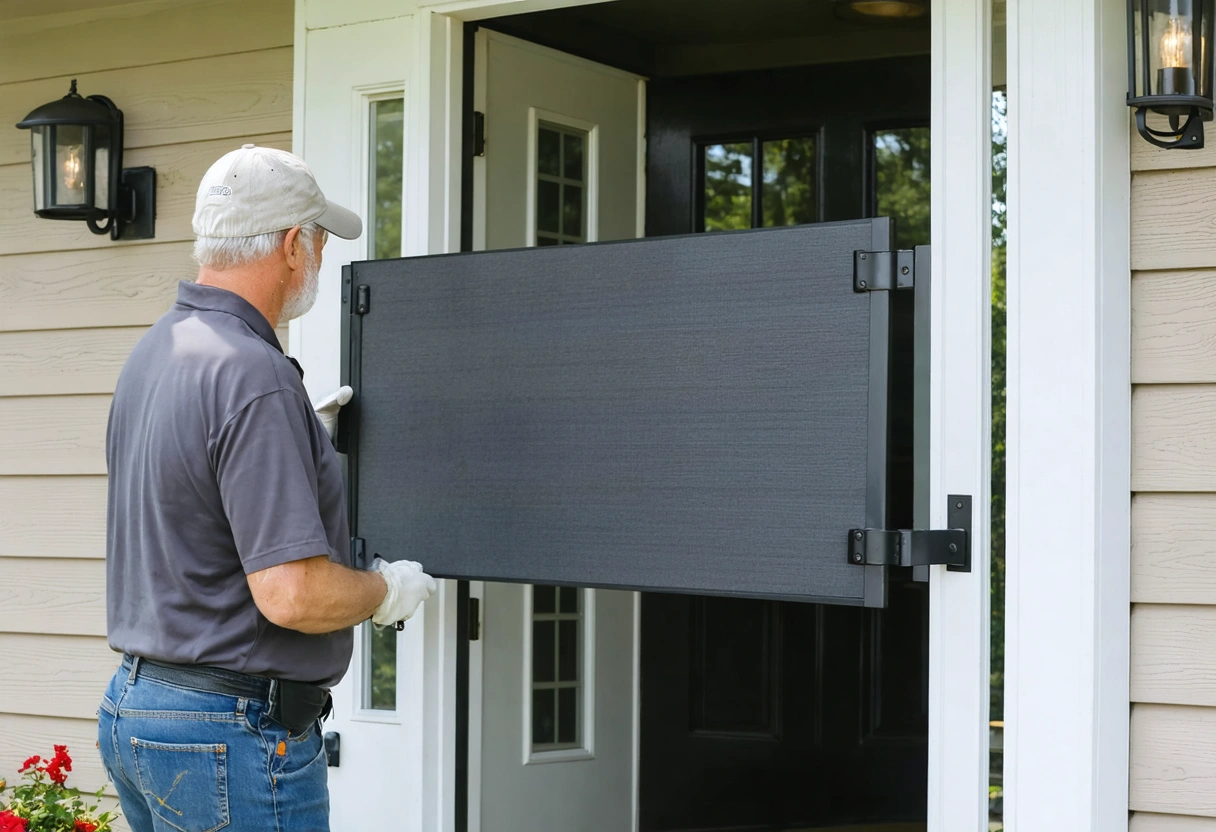
Testing also helps identify issues that may not be obvious during purchase or installation. A panel may be difficult to lift, a bracket may need adjustment, or a storage location may be inconvenient.
Maintenance Steps That Help Keep Flood Barriers Ready
Flood barrier systems should be treated as storm protection equipment that requires regular care. Florida’s heat, humidity, salt air, and frequent rain can affect seals, hardware, tracks, and storage conditions over time.
Inspecting Seals and Gaskets
Seals and gaskets are essential because they help close small gaps where water could pass through. Over time, rubber and flexible materials can dry out, crack, compress, or become coated with dirt and debris.
If a seal no longer returns to its original shape, has visible tears, or does not make consistent contact with the mounting surface, it may need replacement before the next storm season.
Cleaning Tracks, Channels, and Fasteners
Track-based systems can collect sand, leaves, insects, corrosion, and windblown debris. Even a small obstruction may prevent a panel or gate from seating correctly. Cleaning tracks and channels helps barriers slide, lock, or compress into the proper position.
Fasteners should also be checked for rust, bending, stripped threads, or missing components. In coastal Florida communities, corrosion-resistant hardware is especially important because salt air can accelerate deterioration.
Storing Removable Components Properly
Removable panels, shields, and posts should be stored where they are protected from impact, moisture damage, and misplacement. A garage wall rack, labeled storage bin, or dedicated storm preparation area can help homeowners keep all components together.
Each panel should be clearly marked for its matching opening. This is especially helpful for homes with several doors or custom-sized barriers. When storm warnings are issued, labeled components reduce confusion and make installation easier.
Combining Flood Barriers With Other Flood Mitigation Measures
Flood barriers can be an important part of a storm preparation plan, but they work best when combined with other measures that reduce water exposure and limit damage if some intrusion occurs.
Improving Site Drainage
Good drainage helps move water away from the home before it collects against doors, walls, or garage openings. Homeowners should keep gutters, downspouts, yard drains, and swales clear of debris.
In low areas, drainage improvements may include regrading soil, correcting paver slopes, adding channel drains, or maintaining existing stormwater pathways. Drainage systems may not stop storm surge, but they can help reduce standing water and lower pressure on flood barriers during less severe flooding.
Protecting Mechanical and Electrical Systems
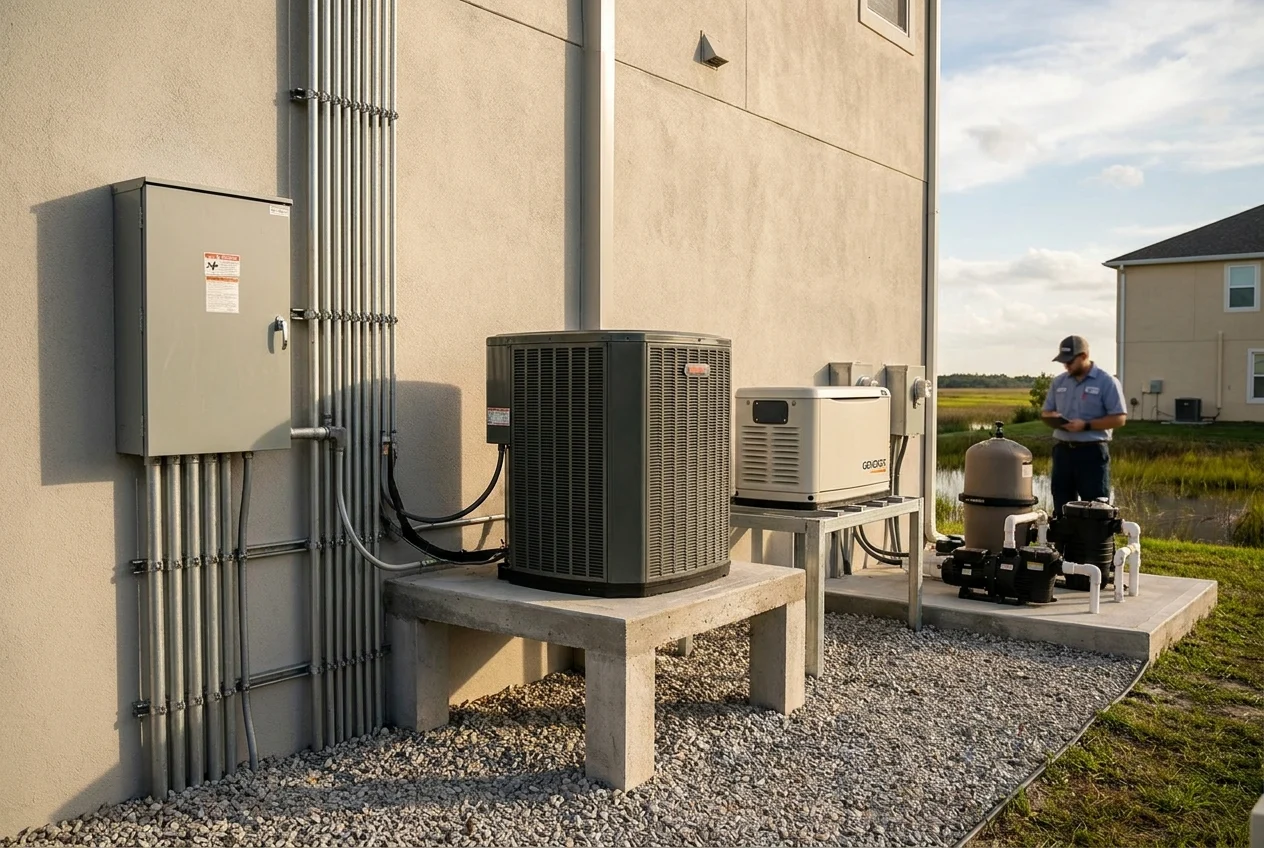
Floodwater can damage air conditioning units, electrical panels, outlets, generators, pool equipment, and water heaters. Where practical and code-compliant, homeowners may reduce risk by elevating critical equipment above expected flood levels or relocating it to less vulnerable areas.
Flood barriers can help protect the building envelope, but equipment located outside the barrier line may still be exposed. Homeowners should identify vulnerable systems and consider protective platforms, flood-resistant enclosures, or shutoff procedures as part of their storm plan.
Using Flood-Resistant Materials in Vulnerable Areas
In areas that have experienced past flooding, flood-resistant materials can help reduce repair costs if water enters despite protective measures. Examples may include tile flooring, closed-cell insulation, cement board, moisture-resistant trim, and removable lower wall panels in certain applications.
These materials do not prevent flooding, but they can make cleanup easier and reduce the amount of material that must be removed after a storm.
Understanding the Limits of Flood Barrier Systems
Flood barrier systems can reduce water intrusion, but homeowners should understand that they are not a guarantee against all flood damage. Severe storm surge, deep water, floating debris, long-duration flooding, and structural weaknesses can exceed the capacity of a barrier system.
Barriers Must Match the Flood Scenario
A barrier designed for low-level flooding may not be suitable for a major hurricane storm surge. Each system has limits related to height, water pressure, opening width, seal design, and structural attachment.
When expected water levels may exceed a barrier’s rated capacity, evacuation and personal safety should always take priority. Property protection is important, but flood barriers should never encourage homeowners to remain in a dangerous surge zone during an evacuation order.
Water May Still Enter Through Hidden Pathways
Even when doors and garages are protected, water can sometimes enter through less visible routes. These may include foundation cracks, plumbing penetrations, weep holes, wall cavities, slab joints, or gaps behind exterior finishes.
This is why flood preparation should include a full review of the home rather than focusing only on obvious openings. Sealing gaps, maintaining plumbing systems, installing backflow devices where appropriate, and inspecting the exterior envelope can all help reduce unexpected intrusion.
Flood Barriers Do Not Replace Insurance or Emergency Planning
Flood barrier systems are a mitigation tool, not a substitute for flood insurance, emergency supplies, evacuation planning, or official storm guidance. Homeowners should continue to review insurance coverage, document property condition, protect important records, and follow instructions from local emergency management agencies.
Preparing a Home Flood Barrier Plan Before Storm Season
The best time to plan for storm surge protection is well before a named storm enters the forecast. A clear flood barrier plan can reduce last-minute stress and improve the chances that the system will be installed correctly when conditions begin to deteriorate.
Map Each Opening and Barrier Component
Homeowners should create a simple list of all protected openings, including front doors, garage doors, sliding glass doors, side entries, vents, and other vulnerable areas. The plan can include installation order, required tools, fastener locations, and special instructions.

Set a Deployment Trigger
Waiting too long to install barriers can create unnecessary risk. Weather conditions may worsen, roads may become congested, or evacuation notices may limit the time available for property preparation.
A clear deployment trigger helps avoid delays. It also allows homeowners to coordinate with family members, neighbors, or professional installers if assistance is needed.
Keep Tools and Safety Gear Accessible
Flood barrier installation may require gloves, a drill, wrenches, screwdrivers, lubricants, cleaning brushes, flashlights, or spare hardware. These items should be stored with or near the barrier system so they are easy to find when storm preparation begins.
Safety gear is also important. Gloves can protect hands from sharp edges, and proper footwear can reduce the risk of slipping while carrying panels. If installation requires lifting heavy components, homeowners should avoid working alone when possible.
How Flood Barriers Support Faster Recovery After a Storm
When flood barriers reduce the amount of water that enters a home, they can also help shorten recovery after a storm. Less intrusion often means less demolition, less drying time, fewer damaged belongings, and a lower risk of long-term moisture problems.
Reducing Interior Damage
Even shallow water can damage baseboards, flooring, cabinets, drywall, insulation, and furniture. By limiting entry through vulnerable openings, flood barriers may help keep interior water levels lower or prevent intrusion in certain areas altogether.
Protecting Stored Items and Essential Spaces
Many homeowners store tools, holiday decorations, family keepsakes, bicycles, and emergency supplies in garages or ground-level rooms. These items are often damaged when water enters quickly and rises before they can be moved.
For some homes, barriers may also help protect access points needed after the storm, such as the main entrance, garage access, or utility areas. Maintaining safer and drier access can make cleanup, inspection, and repairs more manageable.
Supporting Long-Term Home Resilience
Repeated minor flooding can weaken building materials, create recurring mold concerns, and reduce property value. A flood barrier system can help reduce the frequency and severity of water intrusion events, especially when paired with maintenance, drainage improvements, flood-resistant materials, insurance planning, and a clear storm preparation routine.
For Florida homeowners in storm surge-prone areas, resilience is not only about preparing for one hurricane. It is about creating a practical, repeatable plan that helps protect the home, supports safer recovery, and reduces avoidable water damage over time.
Need help with How Flood Barrier Systems Help Florida Homeowners Reduce Water Intrusion During Storm Surge?