






Living along the Gulf Coast means dealing with long cooling seasons, high humidity, salty air, and sudden temperature swings between the outdoors and an air-conditioned interior. In this climate, windows are not just a design feature. They play a major role in how comfortable a home feels and how hard the HVAC system must work to maintain that comfort.
Energy efficient windows are designed to manage heat transfer, solar radiation, and moisture-related issues more effectively than standard or aging windows. For Gulf Coast homeowners, the right window upgrades can help reduce indoor condensation, limit unwanted heat gain, and ease the strain placed on air conditioning systems during hot, humid months.
Why Gulf Coast Homes Face Unique Window Performance Challenges
The Gulf Coast climate creates a demanding environment for residential windows. High outdoor humidity, intense sun exposure, frequent rainfall, and extended periods of heat all affect how windows perform over time.
One of the biggest challenges is the difference between outdoor and indoor conditions. Outside air may be hot and saturated with moisture, while indoor air is often cool and conditioned.
Humidity and temperature differences
Condensation often forms when warm, moist air contacts a cooler surface. In Gulf Coast homes, this can happen on window glass, frames, or nearby trim when indoor surfaces become cold enough for moisture in the air to collect.
Energy efficient windows help reduce this risk by keeping the interior glass surface closer to the indoor room temperature. Features such as insulated glass units, low-conductivity spacers, and improved frame materials can limit the temperature imbalance that encourages moisture to form on the window surface.
Solar heat and year-round cooling demand
Another major challenge is solar heat gain. Gulf Coast homes often receive strong sunlight for much of the year, and untreated or inefficient windows can allow a significant amount of that heat to enter the living space.
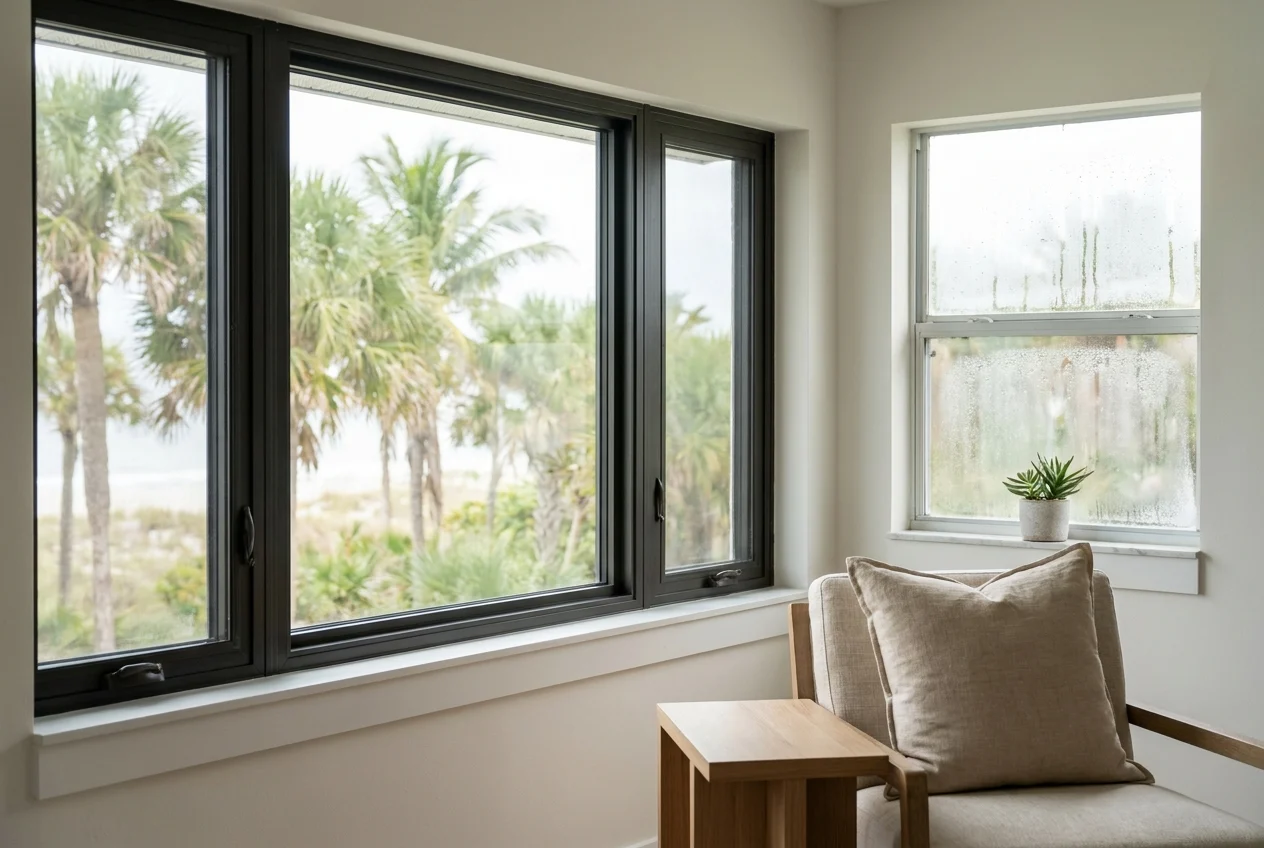
When solar heat gain increases indoor temperatures, the air conditioner must run longer and more frequently to restore comfort. Over time, this added workload can contribute to higher energy bills, reduced HVAC efficiency, and more wear on cooling equipment.
How Energy Efficient Window Features Help Control Condensation
Energy efficient windows reduce condensation by improving the way glass and frames respond to temperature and humidity differences. Instead of allowing outdoor heat and indoor cooling to create sharp surface temperature changes, these windows use layered construction and insulating materials to create a more stable barrier between inside and outside conditions.
This improved thermal performance is especially valuable in humid coastal areas. By helping interior glass surfaces stay warmer when indoor air is cool, energy efficient windows make it harder for moisture to collect.
Insulated glass units
Many energy efficient windows use insulated glass units with two or more panes of glass separated by a sealed space. This space acts as a buffer that slows heat transfer through the window.
For homeowners, this means the inside pane of glass is less likely to become dramatically cooler or warmer than the surrounding room air. A more consistent surface temperature can reduce the likelihood of condensation forming during humid weather or when the air conditioning is running heavily.
Improved frame and spacer materials
Window frames and spacers also influence condensation control. Older metal frames or highly conductive spacers can transfer heat quickly, creating cold or warm spots around the glass edge.
Modern energy efficient windows may use vinyl, fiberglass, composite, thermally improved aluminum, or warm-edge spacer systems to reduce heat transfer around the frame and glass perimeter.

Reducing Heat Gain Through Better Glass Performance
In Gulf Coast homes, controlling heat gain is one of the most important jobs a window can perform. Even when outdoor air is not at its hottest, direct sunlight can quickly warm floors, furniture, walls, and indoor air.
Energy efficient windows are designed to reduce this unwanted heat transfer without requiring homeowners to keep blinds or curtains closed all day. The right glass package can allow natural light into the home while limiting the amount of solar heat that passes through the window.
Low-E coatings and solar control
Low-E glass, short for low-emissivity glass, is one of the most valuable features for homes in hot and humid climates. A Low-E coating is a microscopically thin layer applied to the glass that helps reflect certain types of infrared and ultraviolet energy.
For Gulf Coast homes, solar-control Low-E coatings are especially useful on windows that receive strong afternoon sun. Rooms with west-facing windows, for example, often become uncomfortable late in the day because the sun is lower and more direct.
Solar heat gain coefficient
When comparing energy efficient windows, one important performance rating is the solar heat gain coefficient, often called SHGC. This number indicates how much solar heat passes through the window.
A window with a lower SHGC can help reduce the temperature spikes that occur in sunny rooms. This can make living areas, bedrooms, and home offices more comfortable during the hottest parts of the day.
Visible light without excessive heat
Some homeowners worry that energy efficient windows will make their home feel darker. Modern glass technology can help balance visible light with heat control. This means homeowners can still enjoy daylight, outdoor views, and an open feel while reducing the heat that often comes with direct sun exposure.
This balance is especially helpful in coastal homes with large picture windows, patio doors, sunrooms, or open living spaces. Instead of depending only on window coverings to manage heat, the glass itself provides a layer of solar protection throughout the day.
How Energy Efficient Windows Ease AC Strain
Air conditioning systems in Gulf Coast homes often operate for much of the year. When windows allow excessive heat, air leakage, or radiant warmth into the home, the AC system must work harder to keep indoor temperatures stable.
Energy efficient windows help reduce that burden by improving the home’s thermal envelope. When less heat enters through the windows and less conditioned air escapes around the frames, the cooling system can maintain comfort more efficiently.
Shorter cooling cycles and steadier comfort
In a home with inefficient windows, the air conditioner may run frequently because indoor temperatures rise quickly after each cooling cycle ends. Rooms with intense sun exposure may also feel noticeably warmer than shaded rooms, which can cause homeowners to lower the thermostat to compensate.
Energy efficient windows help slow this temperature rise. By reducing solar heat gain and limiting heat transfer, they support longer periods of stable indoor comfort.
Less pressure on aging HVAC equipment
Many Gulf Coast homes rely on air conditioning systems that already face heavy seasonal use. If the windows are outdated or poorly sealed, the HVAC system may be forced to compensate for problems that are not caused by the equipment itself.
Window upgrades can reduce the cooling load placed on the system. This does not mean windows replace proper HVAC sizing, maintenance, or insulation, but they can make it easier for the system to do its job.
Improved humidity management
Air conditioners do more than cool the air. They also remove moisture during the cooling process. When a home gains heat quickly through inefficient windows, the AC may cycle in a way that does not always support ideal humidity control.
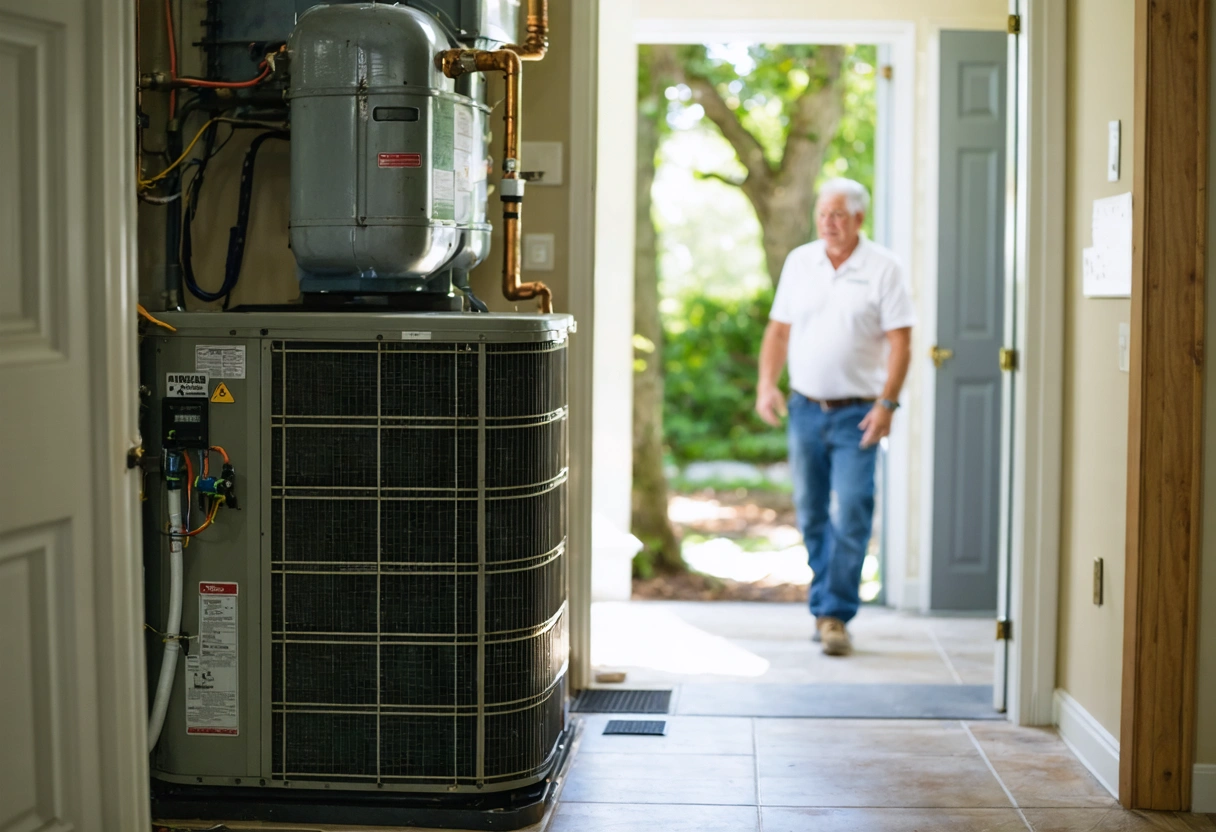
Energy efficient windows help by reducing the amount of heat and moisture-related stress entering the home through weak window areas. A more stable indoor environment gives the AC system a better opportunity to manage both temperature and humidity, which is especially important in coastal regions where muggy air can make a home feel warmer than it is.
The Role of Air Sealing Around Windows
Glass performance is important, but the area around the window matters just as much. Even a high-performance window can underperform if it is installed poorly or if gaps around the frame allow outdoor air to enter.
Proper installation and sealing help the window perform as intended. When the window unit, flashing, insulation, and sealants work together, the home is better protected against both energy loss and moisture intrusion.
Common signs of air leakage
Homeowners may notice several signs that windows are allowing air leakage. Rooms may feel warmer near certain windows, curtains may move slightly when the AC is running, or humidity may feel higher in areas with older window units.
These issues can make the air conditioner work harder because conditioned air escapes while hot, humid air enters. Addressing these weak points can improve comfort even before considering the benefits of upgraded glass.
Importance of professional installation
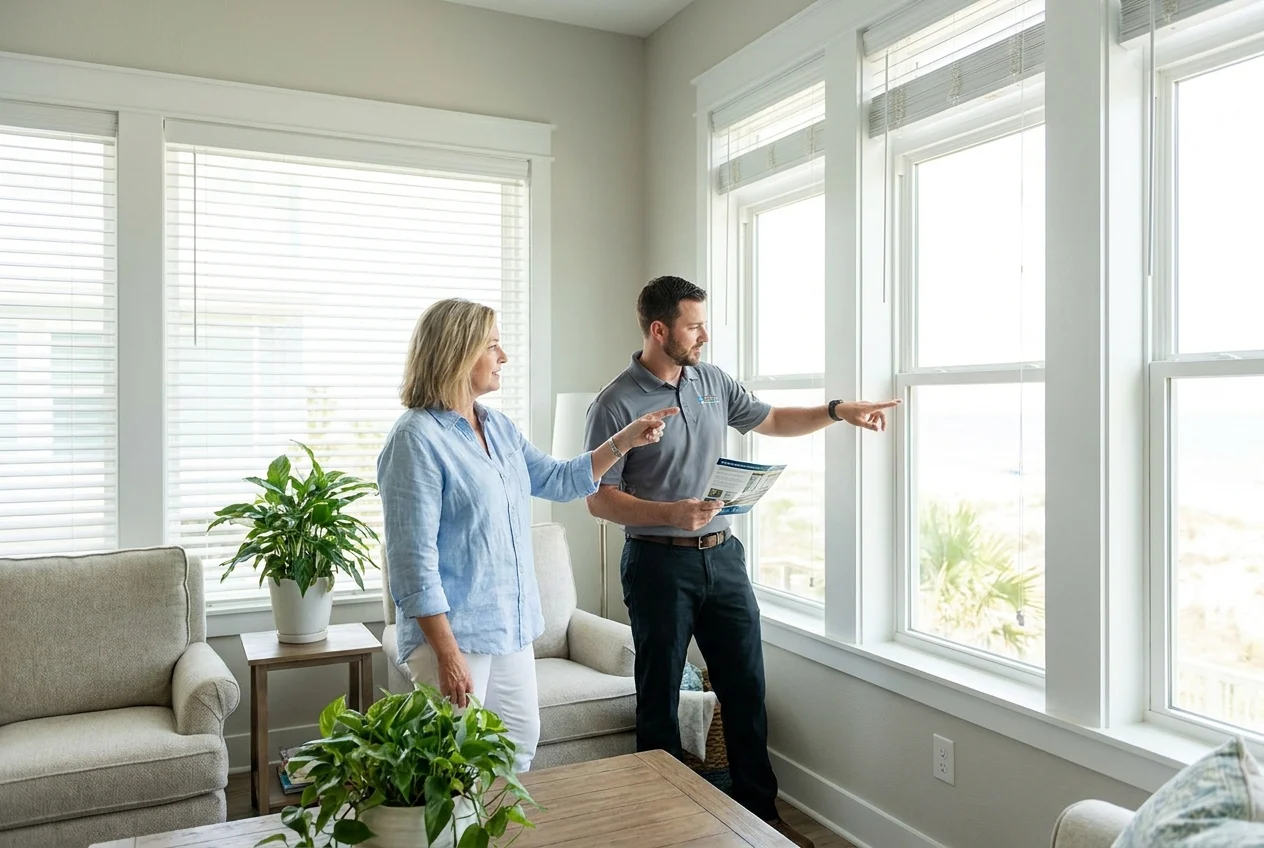
Energy efficient windows depend on correct installation to deliver their full benefits. The window must be properly measured, leveled, flashed, insulated, and sealed to protect against air and water intrusion.
Poor installation may lead to drafts, leaks, frame movement, or premature material deterioration. A properly installed energy efficient window creates a tighter connection between the window and the surrounding wall assembly, helping reduce AC strain and moisture problems over time.

Frame Materials and Coastal Climate Considerations
Window frame material affects insulation, maintenance, durability, and condensation resistance. In Gulf Coast environments, frames must handle heat, humidity, rain, and salty air. Choosing the right frame material can help improve long-term performance and reduce the likelihood of warping, corrosion, or seal failure.
Vinyl and composite frames
Vinyl and composite window frames are popular choices for energy efficiency because they conduct less heat than standard metal frames. This helps reduce hot spots around the window and supports better indoor comfort.
Quality matters, especially in regions with strong sun exposure. Well-made vinyl and composite frames are designed to resist deformation and maintain their shape over time.
Fiberglass frames
Fiberglass frames offer strong thermal performance and dimensional stability. Because fiberglass expands and contracts at a rate similar to glass, it can help maintain a reliable seal as temperatures change.
Thermally improved aluminum frames
Standard aluminum frames conduct heat readily, which can contribute to condensation and heat transfer. However, thermally improved aluminum frames use thermal breaks or insulating barriers to reduce conductivity.
For Gulf Coast homes, thermally improved aluminum may be suitable when structural strength, modern styling, or larger glass areas are priorities. The key is choosing a product designed to limit heat transfer rather than relying on basic aluminum frames that may perform poorly in humid, high-heat conditions.
Need help with How Energy Efficient Windows Help Reduce Condensation, Heat Gain, and AC Strain in Gulf Coast Homes?